Surgeon who mutilated woman's genitals jailed for only two years
And the "regulators" should be in jail as well. The NSW Government can't explain why a doctor banned from obstetrics was able to continue working for them in that field -- performing operations which left many women mutilated. Dr Graeme Steven Reeves is alleged to have mutilated or sexually abused as many as 800 patients. The NSW Medical Board ruled in 1997 that Graeme Stephen Reeves "suffers from personality and relations problems and depression that detrimentally affects his mental capacity to practise medicine". The board ordered him to stop practising obstetrics, but he defied the ban and took up a position in 2001 as a specialist obstetrician and gynaecologist for the Southern Area Health Service, working at Bega and Pambula hospitals
A DOCTOR who indecently assaulted two patients, removed a woman's genitals without her consent and committed fraud, has been sentenced to at least two years jail.
NSW District Court Judge Greg Woods sentenced the 60-year-old doctor, who cannot be named for legal reasons, to a minimum of two years and a maximum of three and a half year years.
In March, a jury found him guilty of maliciously inflicting grievous bodily harm on widow Carolyn DeWaegeneire with intent to cause her grievous bodily harm in 2002.
"I have to live with what happened to me 24-7," Ms DeWaegeneire told the NSW District Court last month.
She told Judge Greg Woods that the doctor had cut off her entire genitals, "the very core of my being".
She said the operation occurred exactly one year after the death of her beloved husband from cancer.
The doctor was found guilty of indecently assaulting two women but acquitted of inappropriately touching three patients, in April, at a judge-alone trial.
Two months earlier, the doctor pleaded guilty to obtaining a financial advantage by deception, involving his breaching a ban by carrying out obstetric procedures.
Ms DeWaegeneire, who has given permission for her name to be published, was a 58-year-old widow when she sought treatment for a small patch of discoloured skin on her labia, later identified as a form of pre-cancer.
The jury accepted that the doctor told her he was going to remove a lesion but never mentioned taking anything else, including her clitoris.
SOURCE
Lesbian housing. Is this legal?
What about Victoria's strict anti-discrimination laws? I guess they can be "bent" for favoured groups
AS an older lesbian, Thelma Tapp was becoming anxious about ageing. She had heard stories of discrimination and homophobia inside nursing homes. But thanks to a new social housing project in Brunswick it is likely she will not have to face it.
The housing, for lesbians aged over 65 experiencing housing stress, is believed to be the first of its type in Australia. It was developed by the Matrix Guild of Victoria and the Victorian Women’s Housing Association.
The three, two-bedroom units in a complex in Albert St are wheelchair accessible, making them suitable for ageing tenants.
Thelma (not her real name) and two other women will be able to rent the units for one quarter of their income for as long as they wish. On the open market, the units would fetch about $350 a week - the equivalent of Thelma’s entire income.
A workplace injury has left her unlikely to work again and she had been homeless for 18 months, so the prospect of affordable long-term accommodation was a huge relief. “I’ve been given this wonderful opportunity and for the first time in 18 months I can finally call somewhere home,” she said.
Matrix will also put her in touch with other lesbians living in the inner-north. “I’m not going to be lonely,” she said. “It’s just been life changing.”
Matrix Guild housing convener Anneke Deutsch said its mission to provide affordable housing to older lesbians began years ago in response to reports of discrimination in aged-care facilities.
“When older women are vulnerable and reliant on people who might be homophobic doing personal care, often women prefer to stay closeted than be out,” she said. “We started off wanting to have an aged-care facility, but that’s a huge amount of work and we found most older lesbians wanted to live in their own homes.”
There are no statistics on the number of number of gay, lesbian, bisexual, transgender and intersex people over 65 in Australia. But given they make up about 10 per cent [Bollocks! More like 2%] of the population, there would be about 240,000, based on 2002 figures from the Australian Institute of Health and Welfare.
Ms Deutsch said housing stress was common among older lesbians because many had acquired little wealth. Ms Deutsch hoped the Brunswick project, dedicated to former member Heather Chapple whose $300,000 bequest helped fund the project, was the first of many.
SOURCE
Toddlers as young as two ready for sex education, says new guide
PARENTS are being urged to start talking about sex with their children from the age of two. A new sex education guide by the Australian Research Centre in Sex, Health and Society says discussing sex is not going to make kids go out and "do it". [Really? The expansion of sex education in British school has coincided with an upsurge in teen pregnancies there]
"Talk soon. Talk often" author Jenny Walsh, of La Trobe University, writes that talking about sex with young people actually had the opposite effect. "We can be so worried about getting it right, perfectly right, that we end up saying nothing at all," Ms Walsh wrote.
The booklet says many parents are still nervous talking about sexuality, including topics such as bodies, babies, love and sexual feelings. It recommends talking to children as young as two about sex and continuing until they are 17. From birth to two years old it is important to start using the right names for body parts, the guide says.
It also covers everything from what you should do if you find your child "playing doctors" to how to approach masturbation.
Family Planning Victoria welcomed the new sex education guide. "We would say that old idea of sitting down and having a talk is absolutely not the way to do it," FPV deputy CEO Elsie L'Huillier said. "There should be a whole process where the issue of sexuality comes up as a natural conversation. It's not a highly stressful 'Let's sit down and talk'."
She said some parents still felt embarrassed to discuss sexuality issues with their children, but it was changing. "There's a reluctance or taboo in some families about being frank about sexuality. It's a big jump for them," she said.
Marie Stopes International Australia CEO Maria Deveson Crabbe said there was no right age to start sex education - it depended on individual families. "I think it is important to recognise that these topics have been stigmatised, but there is no point in burying our heads in the sand." She said sex education was important because poor knowledge of sexual health and decision-making can have long-term impacts.
SOURCE
One Australian State rebels on proposed national curriculum
THE Baillieu government is staging a rebellion against the national curriculum, with state Education Minister Martin Dixon vowing Victoria will not relinquish control over "critical areas" such as languages.
A defiant Mr Dixon said the "current draft" of the national curriculum for languages would "drive down the standards of languages education in Victoria" if it was implemented.
The national curriculum for languages is being developed on the assumption that only 300 to 400 hours would be spent studying a second language between prep and year 6 - about half the hours recommended by the Victorian Education Department.
The states last year agreed they would "substantially" implement the national curriculum in maths, English, history and science by 2013. A national curriculum is also being developed for the arts, geography and languages. They will be rolled out after the first four subjects are implemented.
But Mr Dixon said last night the Coalition would not relinquish jurisdictional authority over critical areas of the national curriculum such as languages education. "The Commonwealth government must wake up and stop pushing Victoria towards the lowest common denominator in education," Mr Dixon said. "We will continue to demand Victoria's high standards form a minimum baseline for national reform."
The rebellion comes as the federal government announced Victoria would receive less than a quarter of the "reward funding" that will go to New South Wales and Queensland under a national agreement to lift literacy and numeracy, because it set itself more ambitious targets than other states.
"Already we have seen national reform in literacy and numeracy reward low aspirations and punish those who aim high as Victoria has done - with more than $21 million cut from Victoria's reward payments by Julia Gillard this week," Mr Dixon said.
In a submission to the national curriculum authority, Victoria said there was "widespread concern" among language teachers that the hours allocated for learning languages in the draft paper were less than the state guidelines. The Victorian Education Department recommends some 150 minutes a week in primary school, which works out to 700 hours before year 7.
The state curriculum authority also questioned why Hindi - one of the world's most widely spoken languages - was not one of the 11 languages included in the national curriculum. It said it was not clear how the 11 languages were selected and considered there was also a strong argument for the Australian sign language, Auslan, to be included.
The Victorian Curriculum and Assessment Authority, which made the submission on behalf of government, independent and Catholic schools, also criticised the curriculum for using too much jargon. It said specialist terms, such as "ideational functions", "rhetorical organisation" and "heritage learners", would be unfamiliar to many.
The criticism comes after the NSW Board of Studies castigated the national curriculum authority for "ignoring" classical languages and failing to address an "alarming" decline in languages education brought about by a focus on literacy and numeracy.
The Australian Curriculum, Assessment and Reporting Authority said the "indicative hours" were only intended as a guide for the curriculum writers. "No decision has been made about how many hours will be spent in the classroom."
SOURCE
Ambulance men tell Geelong mother her dangerously ill baby 'just needs cuddles'
A SIX-month-old baby is lucky to be alive after paramedics told her mother she "just needed some cuddles" despite suffering from a collapsed lung, pneumonia and bronchiolitis.
Baby Mia Hicks-Fitzgibbon spent five days fighting for life at Geelong Hospital in Victoria last week, after her quick-thinking mum, not satisfied with the diagnosis, drove Mia to hospital herself after paramedics left.
Ambulance Victoria is now investigating the paramedics over the incident, the Geelong Advertiser said.
Baby Mia's fight for life began on Friday, June 17 at 10.30am when her mother noticed the little girl was struggling to breathe and had a fluctuating temperature. A worried Ms Hicks dialled 000 and within 15 minutes a Mobile Intensive Care Ambulance arrived at her Norlane home.
Ms Hicks said the paramedics checked Mia over, but left a short time later, satisfied she was all right. "They said 'there's nothing wrong with her, she just needs to stay home and just needs some cuddles'," Ms Hicks said.
Unconvinced, Ms Hicks decided to drive Mia to hospital herself. "As soon as (the ambulance) left, I said 'no, we're taking her in'," Ms Hicks said. "Her breathing was just wrong, she was sucking her stomach right in and she was really trying."
After arriving at the hospital about 11am, Mia was immediately admitted to the children's ward and placed on a resuscitation machine. By Saturday, her condition had worsened and she was moved to intensive care.
"Her heart rate was up to 230 beats per minute when it should only be 120 ... she had a gastric tube in her nose, an oxygen tube in her nose, she was on a drip, and the doctors ordered an X-ray and an ECG (electrocardiogram)," Ms Hicks said. "It was so scary."
Doctors found Mia had a partially collapsed lung and diagnosed her with pneumonia as well as bronchiolitis; the inflammation of the lungs' smallest air passages.
Ms Hicks told of her anguish as Mia clung to life in hospital. She was finally deemed well enough to go home on Wednesday last week. "It was an emotional roller-coaster, I was in tears because all I wanted to do was hold her but I couldn't," she said.
"I asked the doctor what would've happened if I hadn't brought her in (to hospital) myself, and he said 'she wouldn't be here' ... I would've lost my daughter." A hospital source backed Ms Hicks' story, saying staff agreed the paramedics had made a "shocking miss".
Ambulance Victoria last night confirmed it had received a formal complaint from Ms Hicks, and had launched an investigation.
Barwon Health spokeswoman Kate Nelson said the hospital could not comment on the specifics of the case, only confirming the baby had been a patient at the hospital.
SOURCE
Thursday, June 30, 2011
Surgeon who mutilated woman's genitals jailed for only two years
And the "regulators" should be in jail as well. The NSW Government can't explain why a doctor banned from obstetrics was able to continue working for them in that field -- performing operations which left many women mutilated. Dr Graeme Steven Reeves is alleged to have mutilated or sexually abused as many as 800 patients. The NSW Medical Board ruled in 1997 that Graeme Stephen Reeves "suffers from personality and relations problems and depression that detrimentally affects his mental capacity to practise medicine". The board ordered him to stop practising obstetrics, but he defied the ban and took up a position in 2001 as a specialist obstetrician and gynaecologist for the Southern Area Health Service, working at Bega and Pambula hospitals
A DOCTOR who indecently assaulted two patients, removed a woman's genitals without her consent and committed fraud, has been sentenced to at least two years jail.
NSW District Court Judge Greg Woods sentenced the 60-year-old doctor, who cannot be named for legal reasons, to a minimum of two years and a maximum of three and a half year years.
In March, a jury found him guilty of maliciously inflicting grievous bodily harm on widow Carolyn DeWaegeneire with intent to cause her grievous bodily harm in 2002.
"I have to live with what happened to me 24-7," Ms DeWaegeneire told the NSW District Court last month.
She told Judge Greg Woods that the doctor had cut off her entire genitals, "the very core of my being".
She said the operation occurred exactly one year after the death of her beloved husband from cancer.
The doctor was found guilty of indecently assaulting two women but acquitted of inappropriately touching three patients, in April, at a judge-alone trial.
Two months earlier, the doctor pleaded guilty to obtaining a financial advantage by deception, involving his breaching a ban by carrying out obstetric procedures.
Ms DeWaegeneire, who has given permission for her name to be published, was a 58-year-old widow when she sought treatment for a small patch of discoloured skin on her labia, later identified as a form of pre-cancer.
The jury accepted that the doctor told her he was going to remove a lesion but never mentioned taking anything else, including her clitoris.
SOURCE
Lesbian housing. Is this legal?
What about Victoria's strict anti-discrimination laws? I guess they can be "bent" for favoured groups
AS an older lesbian, Thelma Tapp was becoming anxious about ageing. She had heard stories of discrimination and homophobia inside nursing homes. But thanks to a new social housing project in Brunswick it is likely she will not have to face it.
The housing, for lesbians aged over 65 experiencing housing stress, is believed to be the first of its type in Australia. It was developed by the Matrix Guild of Victoria and the Victorian Women’s Housing Association.
The three, two-bedroom units in a complex in Albert St are wheelchair accessible, making them suitable for ageing tenants.
Thelma (not her real name) and two other women will be able to rent the units for one quarter of their income for as long as they wish. On the open market, the units would fetch about $350 a week - the equivalent of Thelma’s entire income.
A workplace injury has left her unlikely to work again and she had been homeless for 18 months, so the prospect of affordable long-term accommodation was a huge relief. “I’ve been given this wonderful opportunity and for the first time in 18 months I can finally call somewhere home,” she said.
Matrix will also put her in touch with other lesbians living in the inner-north. “I’m not going to be lonely,” she said. “It’s just been life changing.”
Matrix Guild housing convener Anneke Deutsch said its mission to provide affordable housing to older lesbians began years ago in response to reports of discrimination in aged-care facilities.
“When older women are vulnerable and reliant on people who might be homophobic doing personal care, often women prefer to stay closeted than be out,” she said. “We started off wanting to have an aged-care facility, but that’s a huge amount of work and we found most older lesbians wanted to live in their own homes.”
There are no statistics on the number of number of gay, lesbian, bisexual, transgender and intersex people over 65 in Australia. But given they make up about 10 per cent [Bollocks! More like 2%] of the population, there would be about 240,000, based on 2002 figures from the Australian Institute of Health and Welfare.
Ms Deutsch said housing stress was common among older lesbians because many had acquired little wealth. Ms Deutsch hoped the Brunswick project, dedicated to former member Heather Chapple whose $300,000 bequest helped fund the project, was the first of many.
SOURCE
Toddlers as young as two ready for sex education, says new guide
PARENTS are being urged to start talking about sex with their children from the age of two. A new sex education guide by the Australian Research Centre in Sex, Health and Society says discussing sex is not going to make kids go out and "do it". [Really? The expansion of sex education in British school has coincided with an upsurge in teen pregnancies there]
"Talk soon. Talk often" author Jenny Walsh, of La Trobe University, writes that talking about sex with young people actually had the opposite effect. "We can be so worried about getting it right, perfectly right, that we end up saying nothing at all," Ms Walsh wrote.
The booklet says many parents are still nervous talking about sexuality, including topics such as bodies, babies, love and sexual feelings. It recommends talking to children as young as two about sex and continuing until they are 17. From birth to two years old it is important to start using the right names for body parts, the guide says.
It also covers everything from what you should do if you find your child "playing doctors" to how to approach masturbation.
Family Planning Victoria welcomed the new sex education guide. "We would say that old idea of sitting down and having a talk is absolutely not the way to do it," FPV deputy CEO Elsie L'Huillier said. "There should be a whole process where the issue of sexuality comes up as a natural conversation. It's not a highly stressful 'Let's sit down and talk'."
She said some parents still felt embarrassed to discuss sexuality issues with their children, but it was changing. "There's a reluctance or taboo in some families about being frank about sexuality. It's a big jump for them," she said.
Marie Stopes International Australia CEO Maria Deveson Crabbe said there was no right age to start sex education - it depended on individual families. "I think it is important to recognise that these topics have been stigmatised, but there is no point in burying our heads in the sand." She said sex education was important because poor knowledge of sexual health and decision-making can have long-term impacts.
SOURCE
One Australian State rebels on proposed national curriculum
THE Baillieu government is staging a rebellion against the national curriculum, with state Education Minister Martin Dixon vowing Victoria will not relinquish control over "critical areas" such as languages.
A defiant Mr Dixon said the "current draft" of the national curriculum for languages would "drive down the standards of languages education in Victoria" if it was implemented.
The national curriculum for languages is being developed on the assumption that only 300 to 400 hours would be spent studying a second language between prep and year 6 - about half the hours recommended by the Victorian Education Department.
The states last year agreed they would "substantially" implement the national curriculum in maths, English, history and science by 2013. A national curriculum is also being developed for the arts, geography and languages. They will be rolled out after the first four subjects are implemented.
But Mr Dixon said last night the Coalition would not relinquish jurisdictional authority over critical areas of the national curriculum such as languages education. "The Commonwealth government must wake up and stop pushing Victoria towards the lowest common denominator in education," Mr Dixon said. "We will continue to demand Victoria's high standards form a minimum baseline for national reform."
The rebellion comes as the federal government announced Victoria would receive less than a quarter of the "reward funding" that will go to New South Wales and Queensland under a national agreement to lift literacy and numeracy, because it set itself more ambitious targets than other states.
"Already we have seen national reform in literacy and numeracy reward low aspirations and punish those who aim high as Victoria has done - with more than $21 million cut from Victoria's reward payments by Julia Gillard this week," Mr Dixon said.
In a submission to the national curriculum authority, Victoria said there was "widespread concern" among language teachers that the hours allocated for learning languages in the draft paper were less than the state guidelines. The Victorian Education Department recommends some 150 minutes a week in primary school, which works out to 700 hours before year 7.
The state curriculum authority also questioned why Hindi - one of the world's most widely spoken languages - was not one of the 11 languages included in the national curriculum. It said it was not clear how the 11 languages were selected and considered there was also a strong argument for the Australian sign language, Auslan, to be included.
The Victorian Curriculum and Assessment Authority, which made the submission on behalf of government, independent and Catholic schools, also criticised the curriculum for using too much jargon. It said specialist terms, such as "ideational functions", "rhetorical organisation" and "heritage learners", would be unfamiliar to many.
The criticism comes after the NSW Board of Studies castigated the national curriculum authority for "ignoring" classical languages and failing to address an "alarming" decline in languages education brought about by a focus on literacy and numeracy.
The Australian Curriculum, Assessment and Reporting Authority said the "indicative hours" were only intended as a guide for the curriculum writers. "No decision has been made about how many hours will be spent in the classroom."
SOURCE
Ambulance men tell Geelong mother her dangerously ill baby 'just needs cuddles'
A SIX-month-old baby is lucky to be alive after paramedics told her mother she "just needed some cuddles" despite suffering from a collapsed lung, pneumonia and bronchiolitis.
Baby Mia Hicks-Fitzgibbon spent five days fighting for life at Geelong Hospital in Victoria last week, after her quick-thinking mum, not satisfied with the diagnosis, drove Mia to hospital herself after paramedics left.
Ambulance Victoria is now investigating the paramedics over the incident, the Geelong Advertiser said.
Baby Mia's fight for life began on Friday, June 17 at 10.30am when her mother noticed the little girl was struggling to breathe and had a fluctuating temperature. A worried Ms Hicks dialled 000 and within 15 minutes a Mobile Intensive Care Ambulance arrived at her Norlane home.
Ms Hicks said the paramedics checked Mia over, but left a short time later, satisfied she was all right. "They said 'there's nothing wrong with her, she just needs to stay home and just needs some cuddles'," Ms Hicks said.
Unconvinced, Ms Hicks decided to drive Mia to hospital herself. "As soon as (the ambulance) left, I said 'no, we're taking her in'," Ms Hicks said. "Her breathing was just wrong, she was sucking her stomach right in and she was really trying."
After arriving at the hospital about 11am, Mia was immediately admitted to the children's ward and placed on a resuscitation machine. By Saturday, her condition had worsened and she was moved to intensive care.
"Her heart rate was up to 230 beats per minute when it should only be 120 ... she had a gastric tube in her nose, an oxygen tube in her nose, she was on a drip, and the doctors ordered an X-ray and an ECG (electrocardiogram)," Ms Hicks said. "It was so scary."
Doctors found Mia had a partially collapsed lung and diagnosed her with pneumonia as well as bronchiolitis; the inflammation of the lungs' smallest air passages.
Ms Hicks told of her anguish as Mia clung to life in hospital. She was finally deemed well enough to go home on Wednesday last week. "It was an emotional roller-coaster, I was in tears because all I wanted to do was hold her but I couldn't," she said.
"I asked the doctor what would've happened if I hadn't brought her in (to hospital) myself, and he said 'she wouldn't be here' ... I would've lost my daughter." A hospital source backed Ms Hicks' story, saying staff agreed the paramedics had made a "shocking miss".
Ambulance Victoria last night confirmed it had received a formal complaint from Ms Hicks, and had launched an investigation.
Barwon Health spokeswoman Kate Nelson said the hospital could not comment on the specifics of the case, only confirming the baby had been a patient at the hospital.
SOURCE
And the "regulators" should be in jail as well. The NSW Government can't explain why a doctor banned from obstetrics was able to continue working for them in that field -- performing operations which left many women mutilated. Dr Graeme Steven Reeves is alleged to have mutilated or sexually abused as many as 800 patients. The NSW Medical Board ruled in 1997 that Graeme Stephen Reeves "suffers from personality and relations problems and depression that detrimentally affects his mental capacity to practise medicine". The board ordered him to stop practising obstetrics, but he defied the ban and took up a position in 2001 as a specialist obstetrician and gynaecologist for the Southern Area Health Service, working at Bega and Pambula hospitals
A DOCTOR who indecently assaulted two patients, removed a woman's genitals without her consent and committed fraud, has been sentenced to at least two years jail.
NSW District Court Judge Greg Woods sentenced the 60-year-old doctor, who cannot be named for legal reasons, to a minimum of two years and a maximum of three and a half year years.
In March, a jury found him guilty of maliciously inflicting grievous bodily harm on widow Carolyn DeWaegeneire with intent to cause her grievous bodily harm in 2002.
"I have to live with what happened to me 24-7," Ms DeWaegeneire told the NSW District Court last month.
She told Judge Greg Woods that the doctor had cut off her entire genitals, "the very core of my being".
She said the operation occurred exactly one year after the death of her beloved husband from cancer.
The doctor was found guilty of indecently assaulting two women but acquitted of inappropriately touching three patients, in April, at a judge-alone trial.
Two months earlier, the doctor pleaded guilty to obtaining a financial advantage by deception, involving his breaching a ban by carrying out obstetric procedures.
Ms DeWaegeneire, who has given permission for her name to be published, was a 58-year-old widow when she sought treatment for a small patch of discoloured skin on her labia, later identified as a form of pre-cancer.
The jury accepted that the doctor told her he was going to remove a lesion but never mentioned taking anything else, including her clitoris.
SOURCE
Lesbian housing. Is this legal?
What about Victoria's strict anti-discrimination laws? I guess they can be "bent" for favoured groups
AS an older lesbian, Thelma Tapp was becoming anxious about ageing. She had heard stories of discrimination and homophobia inside nursing homes. But thanks to a new social housing project in Brunswick it is likely she will not have to face it.
The housing, for lesbians aged over 65 experiencing housing stress, is believed to be the first of its type in Australia. It was developed by the Matrix Guild of Victoria and the Victorian Women’s Housing Association.
The three, two-bedroom units in a complex in Albert St are wheelchair accessible, making them suitable for ageing tenants.
Thelma (not her real name) and two other women will be able to rent the units for one quarter of their income for as long as they wish. On the open market, the units would fetch about $350 a week - the equivalent of Thelma’s entire income.
A workplace injury has left her unlikely to work again and she had been homeless for 18 months, so the prospect of affordable long-term accommodation was a huge relief. “I’ve been given this wonderful opportunity and for the first time in 18 months I can finally call somewhere home,” she said.
Matrix will also put her in touch with other lesbians living in the inner-north. “I’m not going to be lonely,” she said. “It’s just been life changing.”
Matrix Guild housing convener Anneke Deutsch said its mission to provide affordable housing to older lesbians began years ago in response to reports of discrimination in aged-care facilities.
“When older women are vulnerable and reliant on people who might be homophobic doing personal care, often women prefer to stay closeted than be out,” she said. “We started off wanting to have an aged-care facility, but that’s a huge amount of work and we found most older lesbians wanted to live in their own homes.”
There are no statistics on the number of number of gay, lesbian, bisexual, transgender and intersex people over 65 in Australia. But given they make up about 10 per cent [Bollocks! More like 2%] of the population, there would be about 240,000, based on 2002 figures from the Australian Institute of Health and Welfare.
Ms Deutsch said housing stress was common among older lesbians because many had acquired little wealth. Ms Deutsch hoped the Brunswick project, dedicated to former member Heather Chapple whose $300,000 bequest helped fund the project, was the first of many.
SOURCE
Toddlers as young as two ready for sex education, says new guide
PARENTS are being urged to start talking about sex with their children from the age of two. A new sex education guide by the Australian Research Centre in Sex, Health and Society says discussing sex is not going to make kids go out and "do it". [Really? The expansion of sex education in British school has coincided with an upsurge in teen pregnancies there]
"Talk soon. Talk often" author Jenny Walsh, of La Trobe University, writes that talking about sex with young people actually had the opposite effect. "We can be so worried about getting it right, perfectly right, that we end up saying nothing at all," Ms Walsh wrote.
The booklet says many parents are still nervous talking about sexuality, including topics such as bodies, babies, love and sexual feelings. It recommends talking to children as young as two about sex and continuing until they are 17. From birth to two years old it is important to start using the right names for body parts, the guide says.
It also covers everything from what you should do if you find your child "playing doctors" to how to approach masturbation.
Family Planning Victoria welcomed the new sex education guide. "We would say that old idea of sitting down and having a talk is absolutely not the way to do it," FPV deputy CEO Elsie L'Huillier said. "There should be a whole process where the issue of sexuality comes up as a natural conversation. It's not a highly stressful 'Let's sit down and talk'."
She said some parents still felt embarrassed to discuss sexuality issues with their children, but it was changing. "There's a reluctance or taboo in some families about being frank about sexuality. It's a big jump for them," she said.
Marie Stopes International Australia CEO Maria Deveson Crabbe said there was no right age to start sex education - it depended on individual families. "I think it is important to recognise that these topics have been stigmatised, but there is no point in burying our heads in the sand." She said sex education was important because poor knowledge of sexual health and decision-making can have long-term impacts.
SOURCE
One Australian State rebels on proposed national curriculum
THE Baillieu government is staging a rebellion against the national curriculum, with state Education Minister Martin Dixon vowing Victoria will not relinquish control over "critical areas" such as languages.
A defiant Mr Dixon said the "current draft" of the national curriculum for languages would "drive down the standards of languages education in Victoria" if it was implemented.
The national curriculum for languages is being developed on the assumption that only 300 to 400 hours would be spent studying a second language between prep and year 6 - about half the hours recommended by the Victorian Education Department.
The states last year agreed they would "substantially" implement the national curriculum in maths, English, history and science by 2013. A national curriculum is also being developed for the arts, geography and languages. They will be rolled out after the first four subjects are implemented.
But Mr Dixon said last night the Coalition would not relinquish jurisdictional authority over critical areas of the national curriculum such as languages education. "The Commonwealth government must wake up and stop pushing Victoria towards the lowest common denominator in education," Mr Dixon said. "We will continue to demand Victoria's high standards form a minimum baseline for national reform."
The rebellion comes as the federal government announced Victoria would receive less than a quarter of the "reward funding" that will go to New South Wales and Queensland under a national agreement to lift literacy and numeracy, because it set itself more ambitious targets than other states.
"Already we have seen national reform in literacy and numeracy reward low aspirations and punish those who aim high as Victoria has done - with more than $21 million cut from Victoria's reward payments by Julia Gillard this week," Mr Dixon said.
In a submission to the national curriculum authority, Victoria said there was "widespread concern" among language teachers that the hours allocated for learning languages in the draft paper were less than the state guidelines. The Victorian Education Department recommends some 150 minutes a week in primary school, which works out to 700 hours before year 7.
The state curriculum authority also questioned why Hindi - one of the world's most widely spoken languages - was not one of the 11 languages included in the national curriculum. It said it was not clear how the 11 languages were selected and considered there was also a strong argument for the Australian sign language, Auslan, to be included.
The Victorian Curriculum and Assessment Authority, which made the submission on behalf of government, independent and Catholic schools, also criticised the curriculum for using too much jargon. It said specialist terms, such as "ideational functions", "rhetorical organisation" and "heritage learners", would be unfamiliar to many.
The criticism comes after the NSW Board of Studies castigated the national curriculum authority for "ignoring" classical languages and failing to address an "alarming" decline in languages education brought about by a focus on literacy and numeracy.
The Australian Curriculum, Assessment and Reporting Authority said the "indicative hours" were only intended as a guide for the curriculum writers. "No decision has been made about how many hours will be spent in the classroom."
SOURCE
Ambulance men tell Geelong mother her dangerously ill baby 'just needs cuddles'
A SIX-month-old baby is lucky to be alive after paramedics told her mother she "just needed some cuddles" despite suffering from a collapsed lung, pneumonia and bronchiolitis.
Baby Mia Hicks-Fitzgibbon spent five days fighting for life at Geelong Hospital in Victoria last week, after her quick-thinking mum, not satisfied with the diagnosis, drove Mia to hospital herself after paramedics left.
Ambulance Victoria is now investigating the paramedics over the incident, the Geelong Advertiser said.
Baby Mia's fight for life began on Friday, June 17 at 10.30am when her mother noticed the little girl was struggling to breathe and had a fluctuating temperature. A worried Ms Hicks dialled 000 and within 15 minutes a Mobile Intensive Care Ambulance arrived at her Norlane home.
Ms Hicks said the paramedics checked Mia over, but left a short time later, satisfied she was all right. "They said 'there's nothing wrong with her, she just needs to stay home and just needs some cuddles'," Ms Hicks said.
Unconvinced, Ms Hicks decided to drive Mia to hospital herself. "As soon as (the ambulance) left, I said 'no, we're taking her in'," Ms Hicks said. "Her breathing was just wrong, she was sucking her stomach right in and she was really trying."
After arriving at the hospital about 11am, Mia was immediately admitted to the children's ward and placed on a resuscitation machine. By Saturday, her condition had worsened and she was moved to intensive care.
"Her heart rate was up to 230 beats per minute when it should only be 120 ... she had a gastric tube in her nose, an oxygen tube in her nose, she was on a drip, and the doctors ordered an X-ray and an ECG (electrocardiogram)," Ms Hicks said. "It was so scary."
Doctors found Mia had a partially collapsed lung and diagnosed her with pneumonia as well as bronchiolitis; the inflammation of the lungs' smallest air passages.
Ms Hicks told of her anguish as Mia clung to life in hospital. She was finally deemed well enough to go home on Wednesday last week. "It was an emotional roller-coaster, I was in tears because all I wanted to do was hold her but I couldn't," she said.
"I asked the doctor what would've happened if I hadn't brought her in (to hospital) myself, and he said 'she wouldn't be here' ... I would've lost my daughter." A hospital source backed Ms Hicks' story, saying staff agreed the paramedics had made a "shocking miss".
Ambulance Victoria last night confirmed it had received a formal complaint from Ms Hicks, and had launched an investigation.
Barwon Health spokeswoman Kate Nelson said the hospital could not comment on the specifics of the case, only confirming the baby had been a patient at the hospital.
SOURCE

Photos from the Galilee - Carmel, Jezreel, Beit Shearim, and Sepphoris
I've posted some of my photos to Picasa, and below are some examples - a link to the whole album is just below.
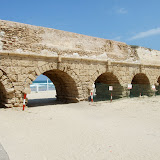 |
| Galilee, June 28, 2011 |
 |
| Carmel Forest - trees burned in the Carmel fire. |
 |
View from the Muhraqa (on the Carmel) towards the Jezreel Valley.  |
 |
| Fish ponds in the Jezreel valley. |
 |
At the Alexander Zaid property in Kiryat Tivon, looking down to one of the fish ponds. |
 |
| Alexander Zaid statue - he was one of the founders of Ha-Shomer, created before WWI to protect Jewish agricultur |
 |
| One of the sarcophagi at the ancient Jewish cemetery at Beit Shearim - in a burial cave. |
 |
| Menorah carved out of the rock of one of the burial caves at Beit Shearim. |
 |
| Mosaic floor at the Sepphoris synagogue (ancient Roman Jewish city) - the sun being drawn on his chariot, in the middle of the wheel of the Zodiac. |
 |
| One of the seasons, pictured in the corner of the Zodiac panel in the Sepphoris synagogue - this is Summer. |
 |
| Two of the signs of the Zodiac - Scorpio and Sagittarius. |
 |
| Basket of first-fruits, which were brought to the Temple in Jerusalem when it still existed. |
 |
| The "Mona Lisa of the Galilee," found on the mosaic floor of a Roman villa in Sepphoris. |
 |
| Menorah on the mosaic floor of the synagogue, with a shofar on the right under the menorah. |
 |
| Image of an Amazon riding a horse and about to throw a spear, at the Nile House at Sepphoris. |
Wednesday, June 29, 2011
Government regulation puts childcare centres out of business
CHILDCARE operators have begun to sell off their businesses to avoid a barrage of new fines and regulations that are expected to force fees up by an average $13 per child per day, more than 20 times what the government had predicted.
Kerry Lada, who ran the Hardy's Road Early Childhood Centre at Mudgeeraba on the Gold Coast for 12 years, sold up two weeks ago. "It was too hard, I was going to have to increase fees by at least $13 a day," she said.
Under national reforms to start on January 1 childcare centres will have to decrease the ratio of babies to carers from various state-mandated levels to four to one.
The full cost will not be felt until 2016, when centres will have to be hiring one staff member for every five children aged 25 to 35 months, and one carer for every 11 children aged three to school age.
Ms Lada said her 55-place centre would have had to drop eight childcare places or hire two extra staff next year as a result of the new regulations.
Nerida Campbell, who trained as a teacher and has two young children, runs a centre in Katanning, Western Australia. She said she could not find the extra qualified staff she needed to meet the regulations in a rural area and her fees would have to rise by $10 a day next year. "In the next six months we'll be thinking about selling," Ms Campbell said.
Staff who had worked in childcare for years were also considering resigning ahead of new regulations that will make staff and centres subject to fines if they did not meet new standards, Ms Lada said.
Childcare Minister Kate Ellis insists independent modelling from Access Economics shows the reforms will have a minimal cost impact of just 57c per child a day in 2012 and $8.67 in 2014-15. But a new survey of 414 private and community-based childcare centres shows operators will raise their fees by an average of $13 a day after the new regulations are introduced.
One in five of those surveyed was contemplating rises of $25 a day.
The survey found 70 per cent of proprietors were not fully aware of their responsibilities under the new laws and 64 per cent said they would have to cut the number of places they offered.
SOURCE
The pay debacle at Qld. Health continues
A star example of bungling bureaucracy
QUEENSLAND Health is under fire for botching calculations of wage overpayments amid claims at least one bill was sent to a deceased employee. Health workers caught in the long-running payroll debacle yesterday detailed a litany of problems with the troubled department's attempts to recover overpaid wages.
One retired nurse, who did not wish to be named, was issued with a bill for 1c - well below the supposed $200 waiver and dwarfed by the $66,000 Queensland Health spent posting glossy repayment brochures to staff.
Some said they did not even work on dates the alleged overpayments occurred. Others believed they were slugged for debts they had already fully or partly repaid.
For Gold Coast Hospital nurse Susan Dale, a letter claiming she owed almost $7000 in overpayments has added "insult to injury". The 50-year-old was last year awarded compensation for psychological injury after being bullied by management but is still waiting for about $1600 of her subsequent payout.
In a further blow, each of the alleged overpayments occurred weeks after she stopped working for QH last April. "All that stuff that I've already gone through with them, it's just like it's never going to go away," she said. "I shouldn't be owing them anything, they should be paying me."
Ms Dale is on stress leave but said she "won't go back" to Queensland Health. "Why would you go back to a company that treats you so bad and then does something like this on top of it all," she said.
Mudgeeraba MP Ros Bates said the latest bungle was "just another assault on nurses". "There seems to be no end in sight; the Government seems to have no idea," Ms Bates said.
Health workers were incensed by QH human resources deputy director-general John Cairns's assertions on Tuesday that the overpayments were accurate as the payroll system had now "stabilised".
A Brisbane payroll worker yesterday told The Courier-Mail that was "totally incorrect". She said she knew at least one letter was sent to an employee who had passed away, while another staffer had paid all but $2 on an $800 debt but received a letter asking her to repay the full amount. "It's horrible for us . . . we've seen what people have gone through, we're just starting to get the trust back and then they go and do this," she said.
Mr Cairns yesterday defended the process, saying figures quoted in letters included only repayments made before May 15 and staff could tick a box to show more had subsequently been repaid.
He said test runs were done to check accuracy and 10 per cent of the 38,000 letters were also manually checked before being sent to staff, with no errors detected. He said an overpayment reconciliation process was done fortnightly during the year and overpayments were "explicitly stated" on all payslips.
SOURCE
GREENIE ROUNDUP
Four current articles below
Attempts to silence Monckton
A CONTROVERSIAL climate change sceptic who likened chief climate adviser Ross Garnaut to a Nazi will deliver his Perth lecture tonight despite fierce opposition by academics.
Lord Christopher Monckton is in Perth to deliver the Lang Hancock Lecture at Fremantle’s Notre Dame University with a speech titled The Climate of Freedom. The lecture is sponsored by Australia’s richest woman and Mr Hancock’s daughter, Gina Rinehart.
Lord Monckton is also addressing the Association of Mining and Exploration annual conference at Burswood this morning.
He is also booked to deliver a lecture at the University of WA on Monday at the Wilsmore Lecture Theatre.
The British aristocrat’s views have divided the science community and more than 50 Australian academics have signed a letter calling on Notre Dame to cancel the lecture. The letter was organised by University of Western Australia political science postgraduate student Natalie Latter, who is studying climate ethics.
Ms Latter said the letter started as a “modest gesture” but she now had 56 signatures. “I just wanted to express my disappointment with the university and I sent it around to some colleagues and realized there was a lot of anger out there,” she said.
“Monckton has consistently undermined the work of lots of scientists. He’s misrepresented their work, misquoted their work, basically has no respect for the scientific or academic process, and so for a university to then be endorsing him is quite a betrayal of the academic community. “He undermines and abuses the values of academic integrity and I think it's important for us to defend that.”
Curtin University sustainability professor Peter Newman labelled the upcoming lecture “disgraceful” and said Lord Monckton had no credibility. “It’s not offensive to have differing points of view, its offensive for a university to put him on as though he were a scientist, as though he’s representing the kind of thing that universities stand for which is that you do try to find the truth in things rather than just opinion,” he told 6PR.
“He’s never published anything in a refereed journal. “To have a university say this is a distinguished person who is representing a point of view that needs to be heard, this is not right. “It gives credibility to a point of view that is purely representing a reaction to change, it’s not actually looking at evidence.”
Notre Dame defend Monckton booking
Notre Dame business school dean Chris Doepel said the university was happy to host Lord Monckton because it wished to provide a forum where "rigorous discussion of contentious public issues can take place".
He told ABC Radio that the university acknowledged that Lord Monckton's views on climate change were widely contested and he expected a vigorous question time at the end of his speech. "The university does not take a view one way or the other on the positions advocated by Christopher Monckton," Professor Doepel said.
Fremantle Mayor Brad Pettitt said he would be attending the lecture. “This will be a controversial lecture and I will be there to challenge him on the facts,” Mr Pettitt wrote on his blog. “While Lord Monckton has the right to his own opinion, he does not have the right to his own facts.”
'We did not invite Monckton' - UWA vice chancellor
The University of WA has also distanced itself from the controversial speaker, and vice-chancellor Professor Alan Robson has said an event booked for Monday at the campus with Lord Monckton in no way reflected the views or values of the University.
Prof Robson said UWA had not invited Lord Monckton to speak at the University, he had simply booked the venue for a lecture. “I reject the position put by Lord Monckton and find his anti-science stance and related comments offensive,” Prof Robson said. “His views denigrate the values of universities, such as ours, where the quality of evidence-based and peer-reviewed science is paramount.
“However, in any one year, hundreds of non-university activities are booked by groups or individuals who are looking to hire a venue for their events. “This is a service the University provides to the community and in no way does it mean that any of these events are endorsed by the University.”
SOURCE
Academic study demolishes the coral reef scare stories
The reefs have been going to hell in a handbasket for years -- according to the Greenies
Greenie leader's economic xenophobia will cost us dearly
FOR a man who so warmly embraces every foreigner seeking asylum in Australia, Bob Brown is strangely xenophobic when it comes to foreigners who want to lend us money or invest here.
Yesterday, at the National Press Club, Brown did his best to stoke up anger against investors from "Switzerland, London, Calcutta, Beijing" and foreigners who, according to a study commissioned by the Greens and released yesterday, own 83 per cent of Australian mining companies. It was not a pretty sight.
Economic debate in Australia will take a turn for the worse once the Greens hold the balance of power in the Senate. Brown may have good intentions but he is economically illiterate. That illiteracy is likely to cost ordinary Australians dearly; many will lose their jobs and their standard of living is likely to fall. It is surprising given their well-developed economic policies that the Greens have managed to avoid careful scrutiny of their party platform. Their industry policy should worry many Australians.
The Greens have long run a campaign against the mining industry and particularly the coal industry. In fact their stated party policy is no new coalmines and no expansion of existing mines. They fully intend to close down the Australian coal industry. Sooner rather than later.
Brown makes two arguments in defence of this policy. First, that renewables would replace coal. Second, that the Australian mining industry is largely foreign owned. Presumably that means the Australian government can destroy foreign investments with impunity.
Economic illiterates make several mistakes in their analysis. Because of his anti-foreign bias, Brown overlooks the benefits of interaction with foreigners. Unfortunately, he is not alone in exhibiting "capital xenophobia".
Australia has long had to borrow money from the rest of the world to finance our economic prosperity. The local economy has grown and foreign investors got their money back. This arrangement has benefited everybody; Australian savings are simply too small to finance our economic growth and standard of living. Foreigners invest in those economies with good prospects and low levels of sovereign risk.
Australia has a good reputation as an investment destination. But Brown is placing that hard-earned reputation at risk. Suggestions by a major political party, in a formal partnership with government and holding the balance of power in the Senate, that foreign investment can be taxed with impunity, or even shut down, raises perceptions of sovereign risk. What's worse, he is not alone. The ill-fated resource super-profits tax also raised serious concerns about sovereign risk.
Remarkably, Brown admits that Australia gets "jobs, export income, royalties and company tax" from mining. But that is not enough; he wants it all. He seems to object to foreigners, in return for their loans and investments, getting "profits, dividends, [and] capital appreciation". There is also a bit of double counting going on; dividends and capital appreciation amount to profits. Or perhaps Brown doesn't know that.
Brown is worried that foreign investors will earn $265 billion from their Australian investments over the next five years and, of that, $50bn will leave the country and $205bn will be reinvested.
Putting those figures into context, the Australian Taxation Office reports for the 2008-09 financial year that the mining industry paid $13.3bn in corporate tax. Of that amount coalmining paid nearly $3.6bn. So the industry paid more in tax in one year than the $10bn Brown suspects will leave the country in dividends each year.
What Brown imagines is that all that money going to foreigners could be diverted into a Norwegian-style sovereign wealth fund. It's not clear what he thinks will happen to the jobs and export income once foreign investment has been withdrawn because it no longer earns any profits, but Brown imagines that Australia could then be like Norway. However, unlike the Norwegian government, the Australian government does not hold large ownership stakes in the minerals industry. So the establishment of a minerals sovereign fund would not mean the diversion of existing government revenue into a fund but rather higher levels of taxation, discouraging work, saving and investment. After all, why do these things if the government is just going to tax away your money?
Economic illiterates believe that with some tweaking the world can be made a better place. In Brown's case the existence of a carbon tax and the demise of the coal industry would make the world a much better place. Yet he has given little thought to how that world would be powered. It's all very well talking about "renewables", but which renewables and how much would they cost?
As the Productivity Commission recently flagged, renewables are expensive; wind power costs $150-$214 a megawatt hour, solar costs $400-$473 a megawatt hour. By contrast, coal-fired electricity costs less than $100 a megawatt hour.
A coal-free Australia would be a lot more expensive, with lower standards of living.
Brown quoted the UN statistic that for every year of delay on climate change $1 trillion of costs will be incurred. What he hasn't explained is how undermining the Australian economy would reduce that cost and why Australians should bear that cost when the UN hasn't managed to convince its members to act in concert on climate change.
The biggest problem Brown faces is that you can't intervene in the economy on the scale he desires without a massive reduction in our economic wellbeing. The problem Australia faces is that Brown doesn't understand that point.
SOURCE
Sydney council's Greenie policies are sending businesses away from the CBD
CLOVER Moore's crazy council policies has big businesses fleeing the Sydney CBD. As they poach billions of investment dollars from the City of Sydney, western suburbs councils are urging business to forget the "weird leadership" and move on.
Parramatta won more than 21 business headquarters in the past five years and is now home to the Commonwealth Bank, Deloitte, Suncorp, Sydney Water, QBE, Westpac, St George Bank, NSW Police, the RTA and the Attorney-General's Department.
Further west, the Blacktown Council area drew Sony, Sharp, Aldi, Asics, LG Electronics, Coca-Cola, Arnotts, Myer and Fujitsu. And 800 national and global groups, including Woolworths, Price-WaterhouseCoopers and IBM, have fled for The Hills.
"Forget about the CBD and move to The Sydney Hills. Forget about the weird leadership. Forget about the extreme agendas. Come to where your council looks after your interests," Hills Mayor Mike Thomas said yesterday.
Owner of CBD lingerie store Arianne, Douglas Reedy, pays thousands of dollars in rent but cannot vote for the council as a business. He said Ms Moore's council was "killing" Sydney with controversial policies such as the bike lanes. "The little people are going broke everywhere over the (CBD). She's disrupting traffic and trying to get people out of the city," Mr Reedy said. He said this year was a "shocker" for revenue - the worst in 25 years: "She's just driving money out. All the developers have left."
Urban Taskforce CEO Aaron Gadiel blasted the council for driving business to despair with red tape, preventing development, and failing to represent all the community. "People want to invest in other places to save themselves the difficulty in dealing with the City of Sydney."
Parramatta Economic Development Forum CEO Christopher Brown said business realised the encumbrance of working in the CBD. "Parramatta is a willing player. It's not only laying out the welcome mat, it's knocking on people's doors," Mr Brown said. "Gone are the days if you didn't have your office in Martin Place it wasn't a real office."
Meriton managing director Harry Triguboff said Sydney's councils had a reputation for stalling projects. "Sydney is notorious for being hopeless, the planners do not want development, the aldermen do not want development, the politicians do not want development," he said.
SOURCE
CHILDCARE operators have begun to sell off their businesses to avoid a barrage of new fines and regulations that are expected to force fees up by an average $13 per child per day, more than 20 times what the government had predicted.
Kerry Lada, who ran the Hardy's Road Early Childhood Centre at Mudgeeraba on the Gold Coast for 12 years, sold up two weeks ago. "It was too hard, I was going to have to increase fees by at least $13 a day," she said.
Under national reforms to start on January 1 childcare centres will have to decrease the ratio of babies to carers from various state-mandated levels to four to one.
The full cost will not be felt until 2016, when centres will have to be hiring one staff member for every five children aged 25 to 35 months, and one carer for every 11 children aged three to school age.
Ms Lada said her 55-place centre would have had to drop eight childcare places or hire two extra staff next year as a result of the new regulations.
Nerida Campbell, who trained as a teacher and has two young children, runs a centre in Katanning, Western Australia. She said she could not find the extra qualified staff she needed to meet the regulations in a rural area and her fees would have to rise by $10 a day next year. "In the next six months we'll be thinking about selling," Ms Campbell said.
Staff who had worked in childcare for years were also considering resigning ahead of new regulations that will make staff and centres subject to fines if they did not meet new standards, Ms Lada said.
Childcare Minister Kate Ellis insists independent modelling from Access Economics shows the reforms will have a minimal cost impact of just 57c per child a day in 2012 and $8.67 in 2014-15. But a new survey of 414 private and community-based childcare centres shows operators will raise their fees by an average of $13 a day after the new regulations are introduced.
One in five of those surveyed was contemplating rises of $25 a day.
The survey found 70 per cent of proprietors were not fully aware of their responsibilities under the new laws and 64 per cent said they would have to cut the number of places they offered.
SOURCE
The pay debacle at Qld. Health continues
A star example of bungling bureaucracy
QUEENSLAND Health is under fire for botching calculations of wage overpayments amid claims at least one bill was sent to a deceased employee. Health workers caught in the long-running payroll debacle yesterday detailed a litany of problems with the troubled department's attempts to recover overpaid wages.
One retired nurse, who did not wish to be named, was issued with a bill for 1c - well below the supposed $200 waiver and dwarfed by the $66,000 Queensland Health spent posting glossy repayment brochures to staff.
Some said they did not even work on dates the alleged overpayments occurred. Others believed they were slugged for debts they had already fully or partly repaid.
For Gold Coast Hospital nurse Susan Dale, a letter claiming she owed almost $7000 in overpayments has added "insult to injury". The 50-year-old was last year awarded compensation for psychological injury after being bullied by management but is still waiting for about $1600 of her subsequent payout.
In a further blow, each of the alleged overpayments occurred weeks after she stopped working for QH last April. "All that stuff that I've already gone through with them, it's just like it's never going to go away," she said. "I shouldn't be owing them anything, they should be paying me."
Ms Dale is on stress leave but said she "won't go back" to Queensland Health. "Why would you go back to a company that treats you so bad and then does something like this on top of it all," she said.
Mudgeeraba MP Ros Bates said the latest bungle was "just another assault on nurses". "There seems to be no end in sight; the Government seems to have no idea," Ms Bates said.
Health workers were incensed by QH human resources deputy director-general John Cairns's assertions on Tuesday that the overpayments were accurate as the payroll system had now "stabilised".
A Brisbane payroll worker yesterday told The Courier-Mail that was "totally incorrect". She said she knew at least one letter was sent to an employee who had passed away, while another staffer had paid all but $2 on an $800 debt but received a letter asking her to repay the full amount. "It's horrible for us . . . we've seen what people have gone through, we're just starting to get the trust back and then they go and do this," she said.
Mr Cairns yesterday defended the process, saying figures quoted in letters included only repayments made before May 15 and staff could tick a box to show more had subsequently been repaid.
He said test runs were done to check accuracy and 10 per cent of the 38,000 letters were also manually checked before being sent to staff, with no errors detected. He said an overpayment reconciliation process was done fortnightly during the year and overpayments were "explicitly stated" on all payslips.
SOURCE
GREENIE ROUNDUP
Four current articles below
Attempts to silence Monckton
A CONTROVERSIAL climate change sceptic who likened chief climate adviser Ross Garnaut to a Nazi will deliver his Perth lecture tonight despite fierce opposition by academics.
Lord Christopher Monckton is in Perth to deliver the Lang Hancock Lecture at Fremantle’s Notre Dame University with a speech titled The Climate of Freedom. The lecture is sponsored by Australia’s richest woman and Mr Hancock’s daughter, Gina Rinehart.
Lord Monckton is also addressing the Association of Mining and Exploration annual conference at Burswood this morning.
He is also booked to deliver a lecture at the University of WA on Monday at the Wilsmore Lecture Theatre.
The British aristocrat’s views have divided the science community and more than 50 Australian academics have signed a letter calling on Notre Dame to cancel the lecture. The letter was organised by University of Western Australia political science postgraduate student Natalie Latter, who is studying climate ethics.
Ms Latter said the letter started as a “modest gesture” but she now had 56 signatures. “I just wanted to express my disappointment with the university and I sent it around to some colleagues and realized there was a lot of anger out there,” she said.
“Monckton has consistently undermined the work of lots of scientists. He’s misrepresented their work, misquoted their work, basically has no respect for the scientific or academic process, and so for a university to then be endorsing him is quite a betrayal of the academic community. “He undermines and abuses the values of academic integrity and I think it's important for us to defend that.”
Curtin University sustainability professor Peter Newman labelled the upcoming lecture “disgraceful” and said Lord Monckton had no credibility. “It’s not offensive to have differing points of view, its offensive for a university to put him on as though he were a scientist, as though he’s representing the kind of thing that universities stand for which is that you do try to find the truth in things rather than just opinion,” he told 6PR.
“He’s never published anything in a refereed journal. “To have a university say this is a distinguished person who is representing a point of view that needs to be heard, this is not right. “It gives credibility to a point of view that is purely representing a reaction to change, it’s not actually looking at evidence.”
Notre Dame defend Monckton booking
Notre Dame business school dean Chris Doepel said the university was happy to host Lord Monckton because it wished to provide a forum where "rigorous discussion of contentious public issues can take place".
He told ABC Radio that the university acknowledged that Lord Monckton's views on climate change were widely contested and he expected a vigorous question time at the end of his speech. "The university does not take a view one way or the other on the positions advocated by Christopher Monckton," Professor Doepel said.
Fremantle Mayor Brad Pettitt said he would be attending the lecture. “This will be a controversial lecture and I will be there to challenge him on the facts,” Mr Pettitt wrote on his blog. “While Lord Monckton has the right to his own opinion, he does not have the right to his own facts.”
'We did not invite Monckton' - UWA vice chancellor
The University of WA has also distanced itself from the controversial speaker, and vice-chancellor Professor Alan Robson has said an event booked for Monday at the campus with Lord Monckton in no way reflected the views or values of the University.
Prof Robson said UWA had not invited Lord Monckton to speak at the University, he had simply booked the venue for a lecture. “I reject the position put by Lord Monckton and find his anti-science stance and related comments offensive,” Prof Robson said. “His views denigrate the values of universities, such as ours, where the quality of evidence-based and peer-reviewed science is paramount.
“However, in any one year, hundreds of non-university activities are booked by groups or individuals who are looking to hire a venue for their events. “This is a service the University provides to the community and in no way does it mean that any of these events are endorsed by the University.”
SOURCE
Academic study demolishes the coral reef scare stories
The reefs have been going to hell in a handbasket for years -- according to the Greenies
Disturbance and the Dynamics of Coral Cover on the Great Barrier Reef (1995–2009)
By Kate Osborne et al.
Abstract
Coral reef ecosystems worldwide are under pressure from chronic and acute stressors that threaten their continued existence. Most obvious among changes to reefs is loss of hard coral cover, but a precise multi-scale estimate of coral cover dynamics for the Great Barrier Reef (GBR) is currently lacking.
Monitoring data collected annually from fixed sites at 47 reefs across 1300 km of the GBR indicate that overall regional coral cover was stable (averaging 29% and ranging from 23% to 33% cover across years) with no net decline between 1995 and 2009.
Subregional trends (10–100 km) in hard coral were diverse with some being very dynamic and others changing little. Coral cover increased in six subregions and decreased in seven subregions. Persistent decline of corals occurred in one subregion for hard coral and Acroporidae and in four subregions in non-Acroporidae families. Change in Acroporidae accounted for 68% of change in hard coral.
Crown-of-thorns starfish (Acanthaster planci) outbreaks and storm damage were responsible for more coral loss during this period than either bleaching or disease despite two mass bleaching events and an increase in the incidence of coral disease. While the limited data for the GBR prior to the 1980's suggests that coral cover was higher than in our survey, we found no evidence of consistent, system-wide decline in coral cover since 1995. Instead, fluctuations in coral cover at subregional scales (10–100 km), driven mostly by changes in fast-growing Acroporidae, occurred as a result of localized disturbance events and subsequent recovery.
PLoS One. 2011; 6(3): e17516.
Greenie leader's economic xenophobia will cost us dearly
FOR a man who so warmly embraces every foreigner seeking asylum in Australia, Bob Brown is strangely xenophobic when it comes to foreigners who want to lend us money or invest here.
Yesterday, at the National Press Club, Brown did his best to stoke up anger against investors from "Switzerland, London, Calcutta, Beijing" and foreigners who, according to a study commissioned by the Greens and released yesterday, own 83 per cent of Australian mining companies. It was not a pretty sight.
Economic debate in Australia will take a turn for the worse once the Greens hold the balance of power in the Senate. Brown may have good intentions but he is economically illiterate. That illiteracy is likely to cost ordinary Australians dearly; many will lose their jobs and their standard of living is likely to fall. It is surprising given their well-developed economic policies that the Greens have managed to avoid careful scrutiny of their party platform. Their industry policy should worry many Australians.
The Greens have long run a campaign against the mining industry and particularly the coal industry. In fact their stated party policy is no new coalmines and no expansion of existing mines. They fully intend to close down the Australian coal industry. Sooner rather than later.
Brown makes two arguments in defence of this policy. First, that renewables would replace coal. Second, that the Australian mining industry is largely foreign owned. Presumably that means the Australian government can destroy foreign investments with impunity.
Economic illiterates make several mistakes in their analysis. Because of his anti-foreign bias, Brown overlooks the benefits of interaction with foreigners. Unfortunately, he is not alone in exhibiting "capital xenophobia".
Australia has long had to borrow money from the rest of the world to finance our economic prosperity. The local economy has grown and foreign investors got their money back. This arrangement has benefited everybody; Australian savings are simply too small to finance our economic growth and standard of living. Foreigners invest in those economies with good prospects and low levels of sovereign risk.
Australia has a good reputation as an investment destination. But Brown is placing that hard-earned reputation at risk. Suggestions by a major political party, in a formal partnership with government and holding the balance of power in the Senate, that foreign investment can be taxed with impunity, or even shut down, raises perceptions of sovereign risk. What's worse, he is not alone. The ill-fated resource super-profits tax also raised serious concerns about sovereign risk.
Remarkably, Brown admits that Australia gets "jobs, export income, royalties and company tax" from mining. But that is not enough; he wants it all. He seems to object to foreigners, in return for their loans and investments, getting "profits, dividends, [and] capital appreciation". There is also a bit of double counting going on; dividends and capital appreciation amount to profits. Or perhaps Brown doesn't know that.
Brown is worried that foreign investors will earn $265 billion from their Australian investments over the next five years and, of that, $50bn will leave the country and $205bn will be reinvested.
Putting those figures into context, the Australian Taxation Office reports for the 2008-09 financial year that the mining industry paid $13.3bn in corporate tax. Of that amount coalmining paid nearly $3.6bn. So the industry paid more in tax in one year than the $10bn Brown suspects will leave the country in dividends each year.
What Brown imagines is that all that money going to foreigners could be diverted into a Norwegian-style sovereign wealth fund. It's not clear what he thinks will happen to the jobs and export income once foreign investment has been withdrawn because it no longer earns any profits, but Brown imagines that Australia could then be like Norway. However, unlike the Norwegian government, the Australian government does not hold large ownership stakes in the minerals industry. So the establishment of a minerals sovereign fund would not mean the diversion of existing government revenue into a fund but rather higher levels of taxation, discouraging work, saving and investment. After all, why do these things if the government is just going to tax away your money?
Economic illiterates believe that with some tweaking the world can be made a better place. In Brown's case the existence of a carbon tax and the demise of the coal industry would make the world a much better place. Yet he has given little thought to how that world would be powered. It's all very well talking about "renewables", but which renewables and how much would they cost?
As the Productivity Commission recently flagged, renewables are expensive; wind power costs $150-$214 a megawatt hour, solar costs $400-$473 a megawatt hour. By contrast, coal-fired electricity costs less than $100 a megawatt hour.
A coal-free Australia would be a lot more expensive, with lower standards of living.
Brown quoted the UN statistic that for every year of delay on climate change $1 trillion of costs will be incurred. What he hasn't explained is how undermining the Australian economy would reduce that cost and why Australians should bear that cost when the UN hasn't managed to convince its members to act in concert on climate change.
The biggest problem Brown faces is that you can't intervene in the economy on the scale he desires without a massive reduction in our economic wellbeing. The problem Australia faces is that Brown doesn't understand that point.
SOURCE
Sydney council's Greenie policies are sending businesses away from the CBD
CLOVER Moore's crazy council policies has big businesses fleeing the Sydney CBD. As they poach billions of investment dollars from the City of Sydney, western suburbs councils are urging business to forget the "weird leadership" and move on.
Parramatta won more than 21 business headquarters in the past five years and is now home to the Commonwealth Bank, Deloitte, Suncorp, Sydney Water, QBE, Westpac, St George Bank, NSW Police, the RTA and the Attorney-General's Department.
Further west, the Blacktown Council area drew Sony, Sharp, Aldi, Asics, LG Electronics, Coca-Cola, Arnotts, Myer and Fujitsu. And 800 national and global groups, including Woolworths, Price-WaterhouseCoopers and IBM, have fled for The Hills.
"Forget about the CBD and move to The Sydney Hills. Forget about the weird leadership. Forget about the extreme agendas. Come to where your council looks after your interests," Hills Mayor Mike Thomas said yesterday.
Owner of CBD lingerie store Arianne, Douglas Reedy, pays thousands of dollars in rent but cannot vote for the council as a business. He said Ms Moore's council was "killing" Sydney with controversial policies such as the bike lanes. "The little people are going broke everywhere over the (CBD). She's disrupting traffic and trying to get people out of the city," Mr Reedy said. He said this year was a "shocker" for revenue - the worst in 25 years: "She's just driving money out. All the developers have left."
Urban Taskforce CEO Aaron Gadiel blasted the council for driving business to despair with red tape, preventing development, and failing to represent all the community. "People want to invest in other places to save themselves the difficulty in dealing with the City of Sydney."
Parramatta Economic Development Forum CEO Christopher Brown said business realised the encumbrance of working in the CBD. "Parramatta is a willing player. It's not only laying out the welcome mat, it's knocking on people's doors," Mr Brown said. "Gone are the days if you didn't have your office in Martin Place it wasn't a real office."
Meriton managing director Harry Triguboff said Sydney's councils had a reputation for stalling projects. "Sydney is notorious for being hopeless, the planners do not want development, the aldermen do not want development, the politicians do not want development," he said.
SOURCE
Government regulation puts childcare centres out of business
CHILDCARE operators have begun to sell off their businesses to avoid a barrage of new fines and regulations that are expected to force fees up by an average $13 per child per day, more than 20 times what the government had predicted.
Kerry Lada, who ran the Hardy's Road Early Childhood Centre at Mudgeeraba on the Gold Coast for 12 years, sold up two weeks ago. "It was too hard, I was going to have to increase fees by at least $13 a day," she said.
Under national reforms to start on January 1 childcare centres will have to decrease the ratio of babies to carers from various state-mandated levels to four to one.
The full cost will not be felt until 2016, when centres will have to be hiring one staff member for every five children aged 25 to 35 months, and one carer for every 11 children aged three to school age.
Ms Lada said her 55-place centre would have had to drop eight childcare places or hire two extra staff next year as a result of the new regulations.
Nerida Campbell, who trained as a teacher and has two young children, runs a centre in Katanning, Western Australia. She said she could not find the extra qualified staff she needed to meet the regulations in a rural area and her fees would have to rise by $10 a day next year. "In the next six months we'll be thinking about selling," Ms Campbell said.
Staff who had worked in childcare for years were also considering resigning ahead of new regulations that will make staff and centres subject to fines if they did not meet new standards, Ms Lada said.
Childcare Minister Kate Ellis insists independent modelling from Access Economics shows the reforms will have a minimal cost impact of just 57c per child a day in 2012 and $8.67 in 2014-15. But a new survey of 414 private and community-based childcare centres shows operators will raise their fees by an average of $13 a day after the new regulations are introduced.
One in five of those surveyed was contemplating rises of $25 a day.
The survey found 70 per cent of proprietors were not fully aware of their responsibilities under the new laws and 64 per cent said they would have to cut the number of places they offered.
SOURCE
The pay debacle at Qld. Health continues
A star example of bungling bureaucracy
QUEENSLAND Health is under fire for botching calculations of wage overpayments amid claims at least one bill was sent to a deceased employee. Health workers caught in the long-running payroll debacle yesterday detailed a litany of problems with the troubled department's attempts to recover overpaid wages.
One retired nurse, who did not wish to be named, was issued with a bill for 1c - well below the supposed $200 waiver and dwarfed by the $66,000 Queensland Health spent posting glossy repayment brochures to staff.
Some said they did not even work on dates the alleged overpayments occurred. Others believed they were slugged for debts they had already fully or partly repaid.
For Gold Coast Hospital nurse Susan Dale, a letter claiming she owed almost $7000 in overpayments has added "insult to injury". The 50-year-old was last year awarded compensation for psychological injury after being bullied by management but is still waiting for about $1600 of her subsequent payout.
In a further blow, each of the alleged overpayments occurred weeks after she stopped working for QH last April. "All that stuff that I've already gone through with them, it's just like it's never going to go away," she said. "I shouldn't be owing them anything, they should be paying me."
Ms Dale is on stress leave but said she "won't go back" to Queensland Health. "Why would you go back to a company that treats you so bad and then does something like this on top of it all," she said.
Mudgeeraba MP Ros Bates said the latest bungle was "just another assault on nurses". "There seems to be no end in sight; the Government seems to have no idea," Ms Bates said.
Health workers were incensed by QH human resources deputy director-general John Cairns's assertions on Tuesday that the overpayments were accurate as the payroll system had now "stabilised".
A Brisbane payroll worker yesterday told The Courier-Mail that was "totally incorrect". She said she knew at least one letter was sent to an employee who had passed away, while another staffer had paid all but $2 on an $800 debt but received a letter asking her to repay the full amount. "It's horrible for us . . . we've seen what people have gone through, we're just starting to get the trust back and then they go and do this," she said.
Mr Cairns yesterday defended the process, saying figures quoted in letters included only repayments made before May 15 and staff could tick a box to show more had subsequently been repaid.
He said test runs were done to check accuracy and 10 per cent of the 38,000 letters were also manually checked before being sent to staff, with no errors detected. He said an overpayment reconciliation process was done fortnightly during the year and overpayments were "explicitly stated" on all payslips.
SOURCE
GREENIE ROUNDUP
Four current articles below
Attempts to silence Monckton
A CONTROVERSIAL climate change sceptic who likened chief climate adviser Ross Garnaut to a Nazi will deliver his Perth lecture tonight despite fierce opposition by academics.
Lord Christopher Monckton is in Perth to deliver the Lang Hancock Lecture at Fremantle’s Notre Dame University with a speech titled The Climate of Freedom. The lecture is sponsored by Australia’s richest woman and Mr Hancock’s daughter, Gina Rinehart.
Lord Monckton is also addressing the Association of Mining and Exploration annual conference at Burswood this morning.
He is also booked to deliver a lecture at the University of WA on Monday at the Wilsmore Lecture Theatre.
The British aristocrat’s views have divided the science community and more than 50 Australian academics have signed a letter calling on Notre Dame to cancel the lecture. The letter was organised by University of Western Australia political science postgraduate student Natalie Latter, who is studying climate ethics.
Ms Latter said the letter started as a “modest gesture” but she now had 56 signatures. “I just wanted to express my disappointment with the university and I sent it around to some colleagues and realized there was a lot of anger out there,” she said.
“Monckton has consistently undermined the work of lots of scientists. He’s misrepresented their work, misquoted their work, basically has no respect for the scientific or academic process, and so for a university to then be endorsing him is quite a betrayal of the academic community. “He undermines and abuses the values of academic integrity and I think it's important for us to defend that.”
Curtin University sustainability professor Peter Newman labelled the upcoming lecture “disgraceful” and said Lord Monckton had no credibility. “It’s not offensive to have differing points of view, its offensive for a university to put him on as though he were a scientist, as though he’s representing the kind of thing that universities stand for which is that you do try to find the truth in things rather than just opinion,” he told 6PR.
“He’s never published anything in a refereed journal. “To have a university say this is a distinguished person who is representing a point of view that needs to be heard, this is not right. “It gives credibility to a point of view that is purely representing a reaction to change, it’s not actually looking at evidence.”
Notre Dame defend Monckton booking
Notre Dame business school dean Chris Doepel said the university was happy to host Lord Monckton because it wished to provide a forum where "rigorous discussion of contentious public issues can take place".
He told ABC Radio that the university acknowledged that Lord Monckton's views on climate change were widely contested and he expected a vigorous question time at the end of his speech. "The university does not take a view one way or the other on the positions advocated by Christopher Monckton," Professor Doepel said.
Fremantle Mayor Brad Pettitt said he would be attending the lecture. “This will be a controversial lecture and I will be there to challenge him on the facts,” Mr Pettitt wrote on his blog. “While Lord Monckton has the right to his own opinion, he does not have the right to his own facts.”
'We did not invite Monckton' - UWA vice chancellor
The University of WA has also distanced itself from the controversial speaker, and vice-chancellor Professor Alan Robson has said an event booked for Monday at the campus with Lord Monckton in no way reflected the views or values of the University.
Prof Robson said UWA had not invited Lord Monckton to speak at the University, he had simply booked the venue for a lecture. “I reject the position put by Lord Monckton and find his anti-science stance and related comments offensive,” Prof Robson said. “His views denigrate the values of universities, such as ours, where the quality of evidence-based and peer-reviewed science is paramount.
“However, in any one year, hundreds of non-university activities are booked by groups or individuals who are looking to hire a venue for their events. “This is a service the University provides to the community and in no way does it mean that any of these events are endorsed by the University.”
SOURCE
Academic study demolishes the coral reef scare stories
The reefs have been going to hell in a handbasket for years -- according to the Greenies
Greenie leader's economic xenophobia will cost us dearly
FOR a man who so warmly embraces every foreigner seeking asylum in Australia, Bob Brown is strangely xenophobic when it comes to foreigners who want to lend us money or invest here.
Yesterday, at the National Press Club, Brown did his best to stoke up anger against investors from "Switzerland, London, Calcutta, Beijing" and foreigners who, according to a study commissioned by the Greens and released yesterday, own 83 per cent of Australian mining companies. It was not a pretty sight.
Economic debate in Australia will take a turn for the worse once the Greens hold the balance of power in the Senate. Brown may have good intentions but he is economically illiterate. That illiteracy is likely to cost ordinary Australians dearly; many will lose their jobs and their standard of living is likely to fall. It is surprising given their well-developed economic policies that the Greens have managed to avoid careful scrutiny of their party platform. Their industry policy should worry many Australians.
The Greens have long run a campaign against the mining industry and particularly the coal industry. In fact their stated party policy is no new coalmines and no expansion of existing mines. They fully intend to close down the Australian coal industry. Sooner rather than later.
Brown makes two arguments in defence of this policy. First, that renewables would replace coal. Second, that the Australian mining industry is largely foreign owned. Presumably that means the Australian government can destroy foreign investments with impunity.
Economic illiterates make several mistakes in their analysis. Because of his anti-foreign bias, Brown overlooks the benefits of interaction with foreigners. Unfortunately, he is not alone in exhibiting "capital xenophobia".
Australia has long had to borrow money from the rest of the world to finance our economic prosperity. The local economy has grown and foreign investors got their money back. This arrangement has benefited everybody; Australian savings are simply too small to finance our economic growth and standard of living. Foreigners invest in those economies with good prospects and low levels of sovereign risk.
Australia has a good reputation as an investment destination. But Brown is placing that hard-earned reputation at risk. Suggestions by a major political party, in a formal partnership with government and holding the balance of power in the Senate, that foreign investment can be taxed with impunity, or even shut down, raises perceptions of sovereign risk. What's worse, he is not alone. The ill-fated resource super-profits tax also raised serious concerns about sovereign risk.
Remarkably, Brown admits that Australia gets "jobs, export income, royalties and company tax" from mining. But that is not enough; he wants it all. He seems to object to foreigners, in return for their loans and investments, getting "profits, dividends, [and] capital appreciation". There is also a bit of double counting going on; dividends and capital appreciation amount to profits. Or perhaps Brown doesn't know that.
Brown is worried that foreign investors will earn $265 billion from their Australian investments over the next five years and, of that, $50bn will leave the country and $205bn will be reinvested.
Putting those figures into context, the Australian Taxation Office reports for the 2008-09 financial year that the mining industry paid $13.3bn in corporate tax. Of that amount coalmining paid nearly $3.6bn. So the industry paid more in tax in one year than the $10bn Brown suspects will leave the country in dividends each year.
What Brown imagines is that all that money going to foreigners could be diverted into a Norwegian-style sovereign wealth fund. It's not clear what he thinks will happen to the jobs and export income once foreign investment has been withdrawn because it no longer earns any profits, but Brown imagines that Australia could then be like Norway. However, unlike the Norwegian government, the Australian government does not hold large ownership stakes in the minerals industry. So the establishment of a minerals sovereign fund would not mean the diversion of existing government revenue into a fund but rather higher levels of taxation, discouraging work, saving and investment. After all, why do these things if the government is just going to tax away your money?
Economic illiterates believe that with some tweaking the world can be made a better place. In Brown's case the existence of a carbon tax and the demise of the coal industry would make the world a much better place. Yet he has given little thought to how that world would be powered. It's all very well talking about "renewables", but which renewables and how much would they cost?
As the Productivity Commission recently flagged, renewables are expensive; wind power costs $150-$214 a megawatt hour, solar costs $400-$473 a megawatt hour. By contrast, coal-fired electricity costs less than $100 a megawatt hour.
A coal-free Australia would be a lot more expensive, with lower standards of living.
Brown quoted the UN statistic that for every year of delay on climate change $1 trillion of costs will be incurred. What he hasn't explained is how undermining the Australian economy would reduce that cost and why Australians should bear that cost when the UN hasn't managed to convince its members to act in concert on climate change.
The biggest problem Brown faces is that you can't intervene in the economy on the scale he desires without a massive reduction in our economic wellbeing. The problem Australia faces is that Brown doesn't understand that point.
SOURCE
Sydney council's Greenie policies are sending businesses away from the CBD
CLOVER Moore's crazy council policies has big businesses fleeing the Sydney CBD. As they poach billions of investment dollars from the City of Sydney, western suburbs councils are urging business to forget the "weird leadership" and move on.
Parramatta won more than 21 business headquarters in the past five years and is now home to the Commonwealth Bank, Deloitte, Suncorp, Sydney Water, QBE, Westpac, St George Bank, NSW Police, the RTA and the Attorney-General's Department.
Further west, the Blacktown Council area drew Sony, Sharp, Aldi, Asics, LG Electronics, Coca-Cola, Arnotts, Myer and Fujitsu. And 800 national and global groups, including Woolworths, Price-WaterhouseCoopers and IBM, have fled for The Hills.
"Forget about the CBD and move to The Sydney Hills. Forget about the weird leadership. Forget about the extreme agendas. Come to where your council looks after your interests," Hills Mayor Mike Thomas said yesterday.
Owner of CBD lingerie store Arianne, Douglas Reedy, pays thousands of dollars in rent but cannot vote for the council as a business. He said Ms Moore's council was "killing" Sydney with controversial policies such as the bike lanes. "The little people are going broke everywhere over the (CBD). She's disrupting traffic and trying to get people out of the city," Mr Reedy said. He said this year was a "shocker" for revenue - the worst in 25 years: "She's just driving money out. All the developers have left."
Urban Taskforce CEO Aaron Gadiel blasted the council for driving business to despair with red tape, preventing development, and failing to represent all the community. "People want to invest in other places to save themselves the difficulty in dealing with the City of Sydney."
Parramatta Economic Development Forum CEO Christopher Brown said business realised the encumbrance of working in the CBD. "Parramatta is a willing player. It's not only laying out the welcome mat, it's knocking on people's doors," Mr Brown said. "Gone are the days if you didn't have your office in Martin Place it wasn't a real office."
Meriton managing director Harry Triguboff said Sydney's councils had a reputation for stalling projects. "Sydney is notorious for being hopeless, the planners do not want development, the aldermen do not want development, the politicians do not want development," he said.
SOURCE
CHILDCARE operators have begun to sell off their businesses to avoid a barrage of new fines and regulations that are expected to force fees up by an average $13 per child per day, more than 20 times what the government had predicted.
Kerry Lada, who ran the Hardy's Road Early Childhood Centre at Mudgeeraba on the Gold Coast for 12 years, sold up two weeks ago. "It was too hard, I was going to have to increase fees by at least $13 a day," she said.
Under national reforms to start on January 1 childcare centres will have to decrease the ratio of babies to carers from various state-mandated levels to four to one.
The full cost will not be felt until 2016, when centres will have to be hiring one staff member for every five children aged 25 to 35 months, and one carer for every 11 children aged three to school age.
Ms Lada said her 55-place centre would have had to drop eight childcare places or hire two extra staff next year as a result of the new regulations.
Nerida Campbell, who trained as a teacher and has two young children, runs a centre in Katanning, Western Australia. She said she could not find the extra qualified staff she needed to meet the regulations in a rural area and her fees would have to rise by $10 a day next year. "In the next six months we'll be thinking about selling," Ms Campbell said.
Staff who had worked in childcare for years were also considering resigning ahead of new regulations that will make staff and centres subject to fines if they did not meet new standards, Ms Lada said.
Childcare Minister Kate Ellis insists independent modelling from Access Economics shows the reforms will have a minimal cost impact of just 57c per child a day in 2012 and $8.67 in 2014-15. But a new survey of 414 private and community-based childcare centres shows operators will raise their fees by an average of $13 a day after the new regulations are introduced.
One in five of those surveyed was contemplating rises of $25 a day.
The survey found 70 per cent of proprietors were not fully aware of their responsibilities under the new laws and 64 per cent said they would have to cut the number of places they offered.
SOURCE
The pay debacle at Qld. Health continues
A star example of bungling bureaucracy
QUEENSLAND Health is under fire for botching calculations of wage overpayments amid claims at least one bill was sent to a deceased employee. Health workers caught in the long-running payroll debacle yesterday detailed a litany of problems with the troubled department's attempts to recover overpaid wages.
One retired nurse, who did not wish to be named, was issued with a bill for 1c - well below the supposed $200 waiver and dwarfed by the $66,000 Queensland Health spent posting glossy repayment brochures to staff.
Some said they did not even work on dates the alleged overpayments occurred. Others believed they were slugged for debts they had already fully or partly repaid.
For Gold Coast Hospital nurse Susan Dale, a letter claiming she owed almost $7000 in overpayments has added "insult to injury". The 50-year-old was last year awarded compensation for psychological injury after being bullied by management but is still waiting for about $1600 of her subsequent payout.
In a further blow, each of the alleged overpayments occurred weeks after she stopped working for QH last April. "All that stuff that I've already gone through with them, it's just like it's never going to go away," she said. "I shouldn't be owing them anything, they should be paying me."
Ms Dale is on stress leave but said she "won't go back" to Queensland Health. "Why would you go back to a company that treats you so bad and then does something like this on top of it all," she said.
Mudgeeraba MP Ros Bates said the latest bungle was "just another assault on nurses". "There seems to be no end in sight; the Government seems to have no idea," Ms Bates said.
Health workers were incensed by QH human resources deputy director-general John Cairns's assertions on Tuesday that the overpayments were accurate as the payroll system had now "stabilised".
A Brisbane payroll worker yesterday told The Courier-Mail that was "totally incorrect". She said she knew at least one letter was sent to an employee who had passed away, while another staffer had paid all but $2 on an $800 debt but received a letter asking her to repay the full amount. "It's horrible for us . . . we've seen what people have gone through, we're just starting to get the trust back and then they go and do this," she said.
Mr Cairns yesterday defended the process, saying figures quoted in letters included only repayments made before May 15 and staff could tick a box to show more had subsequently been repaid.
He said test runs were done to check accuracy and 10 per cent of the 38,000 letters were also manually checked before being sent to staff, with no errors detected. He said an overpayment reconciliation process was done fortnightly during the year and overpayments were "explicitly stated" on all payslips.
SOURCE
GREENIE ROUNDUP
Four current articles below
Attempts to silence Monckton
A CONTROVERSIAL climate change sceptic who likened chief climate adviser Ross Garnaut to a Nazi will deliver his Perth lecture tonight despite fierce opposition by academics.
Lord Christopher Monckton is in Perth to deliver the Lang Hancock Lecture at Fremantle’s Notre Dame University with a speech titled The Climate of Freedom. The lecture is sponsored by Australia’s richest woman and Mr Hancock’s daughter, Gina Rinehart.
Lord Monckton is also addressing the Association of Mining and Exploration annual conference at Burswood this morning.
He is also booked to deliver a lecture at the University of WA on Monday at the Wilsmore Lecture Theatre.
The British aristocrat’s views have divided the science community and more than 50 Australian academics have signed a letter calling on Notre Dame to cancel the lecture. The letter was organised by University of Western Australia political science postgraduate student Natalie Latter, who is studying climate ethics.
Ms Latter said the letter started as a “modest gesture” but she now had 56 signatures. “I just wanted to express my disappointment with the university and I sent it around to some colleagues and realized there was a lot of anger out there,” she said.
“Monckton has consistently undermined the work of lots of scientists. He’s misrepresented their work, misquoted their work, basically has no respect for the scientific or academic process, and so for a university to then be endorsing him is quite a betrayal of the academic community. “He undermines and abuses the values of academic integrity and I think it's important for us to defend that.”
Curtin University sustainability professor Peter Newman labelled the upcoming lecture “disgraceful” and said Lord Monckton had no credibility. “It’s not offensive to have differing points of view, its offensive for a university to put him on as though he were a scientist, as though he’s representing the kind of thing that universities stand for which is that you do try to find the truth in things rather than just opinion,” he told 6PR.
“He’s never published anything in a refereed journal. “To have a university say this is a distinguished person who is representing a point of view that needs to be heard, this is not right. “It gives credibility to a point of view that is purely representing a reaction to change, it’s not actually looking at evidence.”
Notre Dame defend Monckton booking
Notre Dame business school dean Chris Doepel said the university was happy to host Lord Monckton because it wished to provide a forum where "rigorous discussion of contentious public issues can take place".
He told ABC Radio that the university acknowledged that Lord Monckton's views on climate change were widely contested and he expected a vigorous question time at the end of his speech. "The university does not take a view one way or the other on the positions advocated by Christopher Monckton," Professor Doepel said.
Fremantle Mayor Brad Pettitt said he would be attending the lecture. “This will be a controversial lecture and I will be there to challenge him on the facts,” Mr Pettitt wrote on his blog. “While Lord Monckton has the right to his own opinion, he does not have the right to his own facts.”
'We did not invite Monckton' - UWA vice chancellor
The University of WA has also distanced itself from the controversial speaker, and vice-chancellor Professor Alan Robson has said an event booked for Monday at the campus with Lord Monckton in no way reflected the views or values of the University.
Prof Robson said UWA had not invited Lord Monckton to speak at the University, he had simply booked the venue for a lecture. “I reject the position put by Lord Monckton and find his anti-science stance and related comments offensive,” Prof Robson said. “His views denigrate the values of universities, such as ours, where the quality of evidence-based and peer-reviewed science is paramount.
“However, in any one year, hundreds of non-university activities are booked by groups or individuals who are looking to hire a venue for their events. “This is a service the University provides to the community and in no way does it mean that any of these events are endorsed by the University.”
SOURCE
Academic study demolishes the coral reef scare stories
The reefs have been going to hell in a handbasket for years -- according to the Greenies
Disturbance and the Dynamics of Coral Cover on the Great Barrier Reef (1995–2009)
By Kate Osborne et al.
Abstract
Coral reef ecosystems worldwide are under pressure from chronic and acute stressors that threaten their continued existence. Most obvious among changes to reefs is loss of hard coral cover, but a precise multi-scale estimate of coral cover dynamics for the Great Barrier Reef (GBR) is currently lacking.
Monitoring data collected annually from fixed sites at 47 reefs across 1300 km of the GBR indicate that overall regional coral cover was stable (averaging 29% and ranging from 23% to 33% cover across years) with no net decline between 1995 and 2009.
Subregional trends (10–100 km) in hard coral were diverse with some being very dynamic and others changing little. Coral cover increased in six subregions and decreased in seven subregions. Persistent decline of corals occurred in one subregion for hard coral and Acroporidae and in four subregions in non-Acroporidae families. Change in Acroporidae accounted for 68% of change in hard coral.
Crown-of-thorns starfish (Acanthaster planci) outbreaks and storm damage were responsible for more coral loss during this period than either bleaching or disease despite two mass bleaching events and an increase in the incidence of coral disease. While the limited data for the GBR prior to the 1980's suggests that coral cover was higher than in our survey, we found no evidence of consistent, system-wide decline in coral cover since 1995. Instead, fluctuations in coral cover at subregional scales (10–100 km), driven mostly by changes in fast-growing Acroporidae, occurred as a result of localized disturbance events and subsequent recovery.
PLoS One. 2011; 6(3): e17516.
Greenie leader's economic xenophobia will cost us dearly
FOR a man who so warmly embraces every foreigner seeking asylum in Australia, Bob Brown is strangely xenophobic when it comes to foreigners who want to lend us money or invest here.
Yesterday, at the National Press Club, Brown did his best to stoke up anger against investors from "Switzerland, London, Calcutta, Beijing" and foreigners who, according to a study commissioned by the Greens and released yesterday, own 83 per cent of Australian mining companies. It was not a pretty sight.
Economic debate in Australia will take a turn for the worse once the Greens hold the balance of power in the Senate. Brown may have good intentions but he is economically illiterate. That illiteracy is likely to cost ordinary Australians dearly; many will lose their jobs and their standard of living is likely to fall. It is surprising given their well-developed economic policies that the Greens have managed to avoid careful scrutiny of their party platform. Their industry policy should worry many Australians.
The Greens have long run a campaign against the mining industry and particularly the coal industry. In fact their stated party policy is no new coalmines and no expansion of existing mines. They fully intend to close down the Australian coal industry. Sooner rather than later.
Brown makes two arguments in defence of this policy. First, that renewables would replace coal. Second, that the Australian mining industry is largely foreign owned. Presumably that means the Australian government can destroy foreign investments with impunity.
Economic illiterates make several mistakes in their analysis. Because of his anti-foreign bias, Brown overlooks the benefits of interaction with foreigners. Unfortunately, he is not alone in exhibiting "capital xenophobia".
Australia has long had to borrow money from the rest of the world to finance our economic prosperity. The local economy has grown and foreign investors got their money back. This arrangement has benefited everybody; Australian savings are simply too small to finance our economic growth and standard of living. Foreigners invest in those economies with good prospects and low levels of sovereign risk.
Australia has a good reputation as an investment destination. But Brown is placing that hard-earned reputation at risk. Suggestions by a major political party, in a formal partnership with government and holding the balance of power in the Senate, that foreign investment can be taxed with impunity, or even shut down, raises perceptions of sovereign risk. What's worse, he is not alone. The ill-fated resource super-profits tax also raised serious concerns about sovereign risk.
Remarkably, Brown admits that Australia gets "jobs, export income, royalties and company tax" from mining. But that is not enough; he wants it all. He seems to object to foreigners, in return for their loans and investments, getting "profits, dividends, [and] capital appreciation". There is also a bit of double counting going on; dividends and capital appreciation amount to profits. Or perhaps Brown doesn't know that.
Brown is worried that foreign investors will earn $265 billion from their Australian investments over the next five years and, of that, $50bn will leave the country and $205bn will be reinvested.
Putting those figures into context, the Australian Taxation Office reports for the 2008-09 financial year that the mining industry paid $13.3bn in corporate tax. Of that amount coalmining paid nearly $3.6bn. So the industry paid more in tax in one year than the $10bn Brown suspects will leave the country in dividends each year.
What Brown imagines is that all that money going to foreigners could be diverted into a Norwegian-style sovereign wealth fund. It's not clear what he thinks will happen to the jobs and export income once foreign investment has been withdrawn because it no longer earns any profits, but Brown imagines that Australia could then be like Norway. However, unlike the Norwegian government, the Australian government does not hold large ownership stakes in the minerals industry. So the establishment of a minerals sovereign fund would not mean the diversion of existing government revenue into a fund but rather higher levels of taxation, discouraging work, saving and investment. After all, why do these things if the government is just going to tax away your money?
Economic illiterates believe that with some tweaking the world can be made a better place. In Brown's case the existence of a carbon tax and the demise of the coal industry would make the world a much better place. Yet he has given little thought to how that world would be powered. It's all very well talking about "renewables", but which renewables and how much would they cost?
As the Productivity Commission recently flagged, renewables are expensive; wind power costs $150-$214 a megawatt hour, solar costs $400-$473 a megawatt hour. By contrast, coal-fired electricity costs less than $100 a megawatt hour.
A coal-free Australia would be a lot more expensive, with lower standards of living.
Brown quoted the UN statistic that for every year of delay on climate change $1 trillion of costs will be incurred. What he hasn't explained is how undermining the Australian economy would reduce that cost and why Australians should bear that cost when the UN hasn't managed to convince its members to act in concert on climate change.
The biggest problem Brown faces is that you can't intervene in the economy on the scale he desires without a massive reduction in our economic wellbeing. The problem Australia faces is that Brown doesn't understand that point.
SOURCE
Sydney council's Greenie policies are sending businesses away from the CBD
CLOVER Moore's crazy council policies has big businesses fleeing the Sydney CBD. As they poach billions of investment dollars from the City of Sydney, western suburbs councils are urging business to forget the "weird leadership" and move on.
Parramatta won more than 21 business headquarters in the past five years and is now home to the Commonwealth Bank, Deloitte, Suncorp, Sydney Water, QBE, Westpac, St George Bank, NSW Police, the RTA and the Attorney-General's Department.
Further west, the Blacktown Council area drew Sony, Sharp, Aldi, Asics, LG Electronics, Coca-Cola, Arnotts, Myer and Fujitsu. And 800 national and global groups, including Woolworths, Price-WaterhouseCoopers and IBM, have fled for The Hills.
"Forget about the CBD and move to The Sydney Hills. Forget about the weird leadership. Forget about the extreme agendas. Come to where your council looks after your interests," Hills Mayor Mike Thomas said yesterday.
Owner of CBD lingerie store Arianne, Douglas Reedy, pays thousands of dollars in rent but cannot vote for the council as a business. He said Ms Moore's council was "killing" Sydney with controversial policies such as the bike lanes. "The little people are going broke everywhere over the (CBD). She's disrupting traffic and trying to get people out of the city," Mr Reedy said. He said this year was a "shocker" for revenue - the worst in 25 years: "She's just driving money out. All the developers have left."
Urban Taskforce CEO Aaron Gadiel blasted the council for driving business to despair with red tape, preventing development, and failing to represent all the community. "People want to invest in other places to save themselves the difficulty in dealing with the City of Sydney."
Parramatta Economic Development Forum CEO Christopher Brown said business realised the encumbrance of working in the CBD. "Parramatta is a willing player. It's not only laying out the welcome mat, it's knocking on people's doors," Mr Brown said. "Gone are the days if you didn't have your office in Martin Place it wasn't a real office."
Meriton managing director Harry Triguboff said Sydney's councils had a reputation for stalling projects. "Sydney is notorious for being hopeless, the planners do not want development, the aldermen do not want development, the politicians do not want development," he said.
SOURCE
Tuesday, June 28, 2011
How an Australian Leftist government looks after blacks
A Leftist State government is abandoning poor children who have vision and hearing problems
There has been only passing mention of this in the media so I thought I might flesh it out a little.
Ever since 1911 Queensland has had specially trained nurses going around all the schools testing children's vision and hearing and keeping an eye out for any other health problems that they might detect.
This has been especially important in lower socio-economic areas where parents are often not alert to such problems in their children or do not have the confidence to do anything about problems that they are aware of. In such communities the nurse can often galvanize action on a child's vision or hearing loss at an early age and thus remove very large roadblocks to the child's educational progress.
This has been particularly so where Aboriginals (native blacks) are concerned as hearing loss is something of an epidemic among Aboriginal children and the parents are usually far too timid to do anything about it.
So what is the latest from Queensland Health on the centenary of this invaluable service? They are cancelling it. As a substitute they have agreed to pay local GPs a small sum to carry out such testing on anyone who comes in for it
So for a start they have just lost the Aborigines. Many Aborigines won't be alert to the problems concerned and in any case will rarely have the confidence to approach local GPs about such problems. The people who need the assistance of school nurses the most are now having it taken away from them.
And few GPs have the experience and equipment to do a job as good as the job that the specialized nurses do.
And it will just lengthen the already long waits to see a doctor in lower socio-economic areas. In such areas it can take a couple of weeks to get an appointment with a GP. So Queensland Health is just putting a new burden onto already overstretched GPs and stretching out waiting times for appointments even further.
So why is Queensland Health doing this dastardly deed to the poor families of Queensland? Budget cuts. They have spent hundreds of millions on getting their botched payroll system working and the money has got to come from somewhere.
But why take it away from frontline services? 20 years ago the school nurses had only a couple of employees in addition to the nurses themselves. Now there is a great bureaucracy that is more numerous than the nurses. If there have to be cuts, why not cut back the bureaucracy to what it was 20 years ago? The sevice ran perfectly well for many decades without a huge bureaucracy on top of it and could easily do so again.
But Leftist goverments regard their bureaucracies as sacred for some inscrutable reason so that is the last thing they will consider. I guess it gives them a feeling of power to have so many people dependant on them. Pity about the poor, though.
The Minister for Health in the Queensland State government is Hon. Geoff Wilson MP
You can email him here
The unfixable bureaucracy again
Queensland Health in more payroll trauma
FURTHER angst over the Queensland Health payroll system has erupted after complaints over cases of inaccurate overpayment letters distributed to staff in the past weeks. The state government has spent $90 million fixing the system, which left thousands of workers overpaid, underpaid or not paid at all.
But the saga is not over yet. Affected nurses have been sent letters asking them to look at their pay records and determine if they owe Queensland Health any money.
Department Deputy Director General John Cairns defended Queensland Heath's payroll system, saying it had vastly improved since the trouble last year.
"You can appreciate there's been a lot of water under the bridge since what happened last March, our systems are vastly improved on where they are and we're confident about the data in our pay roll system - keep in mind the complexity of what we're talking about 80,000 staff," he said.
"For our staff who do have concerns and wish us to explain it in more detail, we will sit down and talk with them about what the issues are. "When we stopped recovering overpayments last year at the request of our staff and the Queensland Industry Relations Commission - we always said we would have to engage in this process so there should be no surprise with where we are."
Opposition health spokesman Mark McArdle says an already sensitive issue is now completely out of hand. "In the light of what happened in the last 15 months, now forwarding out these letters is traumatic for many people and their families," he told ABC Radio on Tuesday. Health Minister Geoff Wilson must clarify what documents should be used to establish a debt to Queensland Health, how debts would be negotiated, if mediation would be offered, and who would pay for it, Mr McArdle said. "The language in the letter is very poor," he said.
"Anybody claiming money is owed to them has a legal obligation to establish that claim. "It's not up to the person that money is being sought from."
Queensland Nurses Union secretary Beth Mohle said it was unfortunate workers needed to scour their records but there was no other way. "We are strongly urging our members to check what Queensland Health is claiming," she told AAP. "They're going to have to because I wouldn't trust them with the system the way that it is, given that it was so unstable." She said staff should be allowed to make those checks on work time.
Ms Mohle said union members had been urged to record their work hours since last year to match with what they'd been paid. "They could have been underpaid as well," she said. "And Queensland Health has given a commitment that they'll correct the underpayments before they recover overpayments."
SOURCE
Saving the planet will destroy the economy
MARGARET Thatcher's one time right-hand man Nigel Lawson is not so much a climate sceptic as sceptical of the necessity for action, let alone the ways we are tackling climate change.
Lawson will be in Sydney in six weeks to expound his views at a public debate on the proposition: "We need a carbon tax to help stop global warming."
The combatants themselves should raise temperatures. The former British chancellor of the exchequer and energy secretary will lead a negative team comprising former Keating government minister Gary Johns and University of Adelaide geologist and author of the sceptic's bible Heaven and Earth, Ian Plimer.
The affirmative will be put by two former opposition leaders, John Hewson and Mark Latham, backed by University of NSW climatologist Benjamin McNeil.
Lawson says it is scientifically established that increased carbon dioxide emissions will warm the planet, but adds, "it is uncertain how great any such warming would be and how much harm, if any, it would do". He urges governments "to consider the damaging economic impact of blindly following the climate change agenda".
He dismisses as "complete nonsense" the argument that Australia has a special responsibility as a carbon-intensive economy and big coal producer to show global policy leadership.
"If China wants to develop and wants to increase productivity through, among other things, increasing electricity output rapidly and has been building coal-fired power stations and wants to import the coal to fuel them from Australia, I think you would be mad if you didn't supply it," he tells The Weekend Australian.
Lawson sees continuing strong demand for Australian coal despite promises by China and India to reduce their energy intensity, calling the pledges "cover". "Economic development happens because of increased economic efficiency," he says. "That means increasing labour productivity and that also means increasing the productivity of the other factors of production of which energy is one of the most important."
Lawson adds the development of a less energy-intensive services sector is one of the characteristics of economic development. But he adds: "That doesn't mean energy consumption will decline. Energy consumption will rise. Carbon consumption will rise because economic growth will trump the lesser amount of energy used for each particular unit of output."
He calls energy intensity promises by China and India "convenient cover for their saying, quite rightly, 'no way are we going to impede or in any way slow down our economic development by having restrictions on the use of carbon energy'. They go for carbon intensity rather than carbon emissions, which they can be perfectly confident is bound to decline through a process of development as it has in every country in the world."
Lawson warns our politicians not to hold up his own party's policies as exemplars.
Julia Gillard regularly points to British Prime Minister David Cameron's environmental plans to embarrass the Coalition, but Lawson says Tory backbenchers "are increasingly uncomfortable and indeed hostile to policies [that] are being proposed on the climate change front, which mean higher energy costs, which are bad for consumers ... and bad for British industry".
He points out Cameron and his ministers have a plan B. "The government has said it will review the matter in January 2014 in the light of what other European countries are doing and this is clearly a get-out clause, this is clearly new, and it was clearly put in at the behest of the Treasury as both the Treasury and Treasury ministers are very concerned at the cost of going it alone."
Economics and energy security are at the core of Lawson's critique of the climate policy debate. "The world relies on carbon-based energy simply because it is by far the cheapest available source of energy and is likely to remain so for the foreseeable future," he says. "The major developing countries, in particular, are understandably unwilling to hold back their development and condemn their people to avoidable poverty by moving from relatively cheap energy to relatively expensive energy."
Lawson heralds new developments that permit extraction of gas from shale in an economic way as "one of the most remarkable technological developments there has been", saying the shift from coal to gas that is set to follow will cut emissions.
"This is carbon energy but the amount of carbon dioxide produced per terawatt of energy generated from gas is half that from coal," he says. "You don't eliminate carbon emissions but you reduce them quite considerably by moving from coal to gas. Of course the environmentalists are appalled by this because they believe that carbon energy has to be eliminated altogether but that's not going to happen."
Lawson returns once again to the cost of renewable energy. "If renewable energy is cheaper than carbon energy, then that's fine," he says, "but for the present time and in the foreseeable future most forms of renewable energy are massively more expensive."
Lawson dismisses as economic illiteracy claims of a green jobs boom powered by renewables that will mop up unemployment from the structural adjustment to a low-carbon economy, recruiting one of the great classical liberals to back his case.
"The French 19th-century economist Frederic Bastiat said you might as well go round breaking windows saying you're creating jobs for glaziers. The fact is you can't look at just one sector. The government can create jobs by employing large numbers of people to build statues of prominent politicians. You can always create jobs in a particular area.
"What you've got to be concerned about are jobs in the economy as a whole and you don't create jobs in the economy as a whole by promoting something [that] is wholly uneconomic and has to be subsidised."
Lawson has strong views about what decarbonisation means. "The plain fact is the total economy will be harmed. A lot of these green jobs will be in China. The Chinese can see there is a market in the West for solar panels and other things so they are producing them very much more cheaply. In so far as there are jobs they will be there, not in the consuming countries."
SOURCE
Fibre network to bring higher costs and new monopoly, Victoria warns
THE $36 billion National Broadband Network could saddle consumers with unnecessarily high internet costs and hold back competition, the Victorian government warns in a scathing assessment of federal Labor's broadband plans.
As pressure on the Gillard government grows from conservative states over the NBN, Victoria's Technology Minister Gordon Rich-Phillips has warned that taxpayers could "pay multiple times" if the NBN duplicates existing fibre connections to schools, hospitals and businesses.
In a submission to the House of Representatives inquiry into the NBN, Victoria has warned Canberra that it appears to have given "excessive" protections to the NBN Co against competition and cautions about the risks of setting up the network as a large public monopoly.
"After over two decades of national economic and financial reform, the NBN proposal in its present form represents a very serious threat to the long-term competition in the telecommunications sector," the submission warns.
"The increasingly apparent risk is that the commonwealth could, over time, fully replicate a dysfunctional telecommunications market structure that has hindered investments in the current broadband market. This would be the result if it simply replaces Telstra's market power with an NBN Co infrastructure monopoly with all the attendant inefficiencies and constraints on investment, innovation and future policymaking."
Victoria describes information about the NBN rollout as "ad hoc" and says there was "minimal effective engagement" with the states in developing the National Digital Economy Strategy, even though they deliver key services such as health and education.
The comments are the strongest challenge yet by a state government to Labor's NBN plans, which represent a key plank of Julia Gillard's reform agenda.
They come as the conservative governments of Victoria, NSW and Western Australia challenge the Prime Minister on other reforms such as the carbon tax, the mining tax and health.
Late yesterday, Paul Broad, incoming chief executive of the new independent body Infrastructure NSW, pledged to do what he could to avoid a costly broadband rollout. "We understand that NSW has an enormous amount of fibre already," Mr Broad told The Australian. "We understand that NSW businesses, hospitals, schools are connected to fibre today. NSW will use that to the benefits of the NSW economy and access the NBN only to those parts where they are not covered today."
The office of Communications Minister Stephen Conroy last night insisted the government did not expect NBN Co to inefficiently duplicate existing infrastructure that could support high-speed broadband.
"It should also be noted that the definitive agreements between Telstra and NBN Co allow for re-use of existing infrastructure, which will avoid infrastructure duplication," Senator Conroy's spokesman said.
In its submission, the Victorian government stresses that ubiquitous high-speed broadband could deliver substantial benefits, that existing services are inadequate in some areas and that Canberra's objectives to reform the telecommunications market are important. But risks are emerging.
On cost, Victoria argues cheaper alternatives to Labor's fibre-to-the-premises model should be available where this would meet broadband needs.
On competition, the submission cites concerns about Telstra and Optus removing broadband services provided over their pay-TV networks as well as the ban on potential NBN rivals cherry-picking lucrative areas.
Victoria also argues that states and local governments have faced uncertainty about the rollout and its priorities.
NBN Co is conducting a study into extending the fibre rollout to Julia Creek in outback Queensland. The move comes after a backlash from residents angry that the main cable passes the town, but does not connect them because there are less than 1000 premises.
McKinlay Shire Mayor Paul Woodhouse said: "I appreciate they are rolling out a multi-billion-dollar program, but it comes back to our planning, our inability to plan. "It's just a nightmare as far as our future planning goes."
Senator Conroy's spokesman said it was "completely absurd" to claim there had been minimal engagement, while an NBN Co spokeswoman said it was "keen to engage with all levels of government to discuss our plans".
"This engagement is continuing and is likely to ramp up as the network rollout accelerates," Senator Conroy's spokesman said.
SOURCE
Abortion furore rages after church sacks hospital board
Sacked St Andrew's Toowoomba Hospital governors are planning legal action after the Presbyterian Church of Queensland abruptly removed them from their posts amid tensions over the hospital's abortion policy and the church's influence on operations.
The PCQ dismissed 12 of the hospital's governors last week.
Yesterday, former board members said they were planning a legal challenge to their dismissal and bristled at perceptions they took a pro-choice stance on abortion.
Former board member Paul McMahon said the sacked governors refused to back a motion suggesting the hospital not perform abortions unless the mother was threatened with immediate death. But he said the hospital's current position on abortion was "hardly a loose policy".
"The hospital already has very, very strict termination laws such that there were only two terminations last year," he said. "One related to a dead baby in the womb and the other related to a baby that would not survive outside the womb. "What's happened now is that the hospital and past governors are being painted as pro-choice. That sickens me."
Mr McMahon said the sacked governors were considering defamation proceedings and also believed the church contravened corporations law when it asked governors up for re-election to sign a nomination form pledging to act according to the tenets of the church. "[The law] says that a director's first duty is to the organisation, you can't have two masters," he said. "We said we couldn't sign them because in our view they contravene corporations law."
PCQ moderator Graeme McKay told ABC radio yesterday morning media reports of the sackings had focused too heavily on the abortion issue. He said the governors were removed last week because they were trying to limit the church's influence on the hospital. "The reason they were removed is some of these governors were seen to be taking steps to remove the church from the hospital," he said.
"The Presbyterian Church does have a statement on abortion and some of the board members took an issue with the church's position on abortion."
Former St Andrew's vice-chairman Jock Lambie said he still hasn't been notified by the church of his dismissal. He said he received a phone call from Mr Fairweather last Monday saying he had been sacked three hours before a board meeting he had expected to attend. Dr Lambie said he expected a review of the hospital's abortion policy to be the new board's first order of business.
However he defended the existing stance on abortion. "The only abortions that are done are when the baby is not expected to survive," he said. "They [the church] leave that up to God. That's alright except none of them are women, so they don't know what it's like carrying a monster in their belly.
"The two most recent terminations that were done, the babies had no heads. How would you like to carry that, knowing it was there, for an extra 20 weeks to go through a painful labour and produce a child that lives for five minutes?"
Yesterday, St Andrew's chief executive Ray Fairweather said the hospital would follow the wishes of the new board of governors, which is expected to review the hospital's abortion policy. Mr Fairweather said he would have no problem working with the new board appointed by the PCQ.
"[A change in abortion policy] is up to the board of governors," he said. "I have 35 years' experience working with boards of directors, I've established new boards, I've worked with any range of boards and this is just another situation that I have to work with."
SOURCE
A Leftist State government is abandoning poor children who have vision and hearing problems
There has been only passing mention of this in the media so I thought I might flesh it out a little.
Ever since 1911 Queensland has had specially trained nurses going around all the schools testing children's vision and hearing and keeping an eye out for any other health problems that they might detect.
This has been especially important in lower socio-economic areas where parents are often not alert to such problems in their children or do not have the confidence to do anything about problems that they are aware of. In such communities the nurse can often galvanize action on a child's vision or hearing loss at an early age and thus remove very large roadblocks to the child's educational progress.
This has been particularly so where Aboriginals (native blacks) are concerned as hearing loss is something of an epidemic among Aboriginal children and the parents are usually far too timid to do anything about it.
So what is the latest from Queensland Health on the centenary of this invaluable service? They are cancelling it. As a substitute they have agreed to pay local GPs a small sum to carry out such testing on anyone who comes in for it
So for a start they have just lost the Aborigines. Many Aborigines won't be alert to the problems concerned and in any case will rarely have the confidence to approach local GPs about such problems. The people who need the assistance of school nurses the most are now having it taken away from them.
And few GPs have the experience and equipment to do a job as good as the job that the specialized nurses do.
And it will just lengthen the already long waits to see a doctor in lower socio-economic areas. In such areas it can take a couple of weeks to get an appointment with a GP. So Queensland Health is just putting a new burden onto already overstretched GPs and stretching out waiting times for appointments even further.
So why is Queensland Health doing this dastardly deed to the poor families of Queensland? Budget cuts. They have spent hundreds of millions on getting their botched payroll system working and the money has got to come from somewhere.
But why take it away from frontline services? 20 years ago the school nurses had only a couple of employees in addition to the nurses themselves. Now there is a great bureaucracy that is more numerous than the nurses. If there have to be cuts, why not cut back the bureaucracy to what it was 20 years ago? The sevice ran perfectly well for many decades without a huge bureaucracy on top of it and could easily do so again.
But Leftist goverments regard their bureaucracies as sacred for some inscrutable reason so that is the last thing they will consider. I guess it gives them a feeling of power to have so many people dependant on them. Pity about the poor, though.
The Minister for Health in the Queensland State government is Hon. Geoff Wilson MP
You can email him here
The unfixable bureaucracy again
Queensland Health in more payroll trauma
FURTHER angst over the Queensland Health payroll system has erupted after complaints over cases of inaccurate overpayment letters distributed to staff in the past weeks. The state government has spent $90 million fixing the system, which left thousands of workers overpaid, underpaid or not paid at all.
But the saga is not over yet. Affected nurses have been sent letters asking them to look at their pay records and determine if they owe Queensland Health any money.
Department Deputy Director General John Cairns defended Queensland Heath's payroll system, saying it had vastly improved since the trouble last year.
"You can appreciate there's been a lot of water under the bridge since what happened last March, our systems are vastly improved on where they are and we're confident about the data in our pay roll system - keep in mind the complexity of what we're talking about 80,000 staff," he said.
"For our staff who do have concerns and wish us to explain it in more detail, we will sit down and talk with them about what the issues are. "When we stopped recovering overpayments last year at the request of our staff and the Queensland Industry Relations Commission - we always said we would have to engage in this process so there should be no surprise with where we are."
Opposition health spokesman Mark McArdle says an already sensitive issue is now completely out of hand. "In the light of what happened in the last 15 months, now forwarding out these letters is traumatic for many people and their families," he told ABC Radio on Tuesday. Health Minister Geoff Wilson must clarify what documents should be used to establish a debt to Queensland Health, how debts would be negotiated, if mediation would be offered, and who would pay for it, Mr McArdle said. "The language in the letter is very poor," he said.
"Anybody claiming money is owed to them has a legal obligation to establish that claim. "It's not up to the person that money is being sought from."
Queensland Nurses Union secretary Beth Mohle said it was unfortunate workers needed to scour their records but there was no other way. "We are strongly urging our members to check what Queensland Health is claiming," she told AAP. "They're going to have to because I wouldn't trust them with the system the way that it is, given that it was so unstable." She said staff should be allowed to make those checks on work time.
Ms Mohle said union members had been urged to record their work hours since last year to match with what they'd been paid. "They could have been underpaid as well," she said. "And Queensland Health has given a commitment that they'll correct the underpayments before they recover overpayments."
SOURCE
Saving the planet will destroy the economy
MARGARET Thatcher's one time right-hand man Nigel Lawson is not so much a climate sceptic as sceptical of the necessity for action, let alone the ways we are tackling climate change.
Lawson will be in Sydney in six weeks to expound his views at a public debate on the proposition: "We need a carbon tax to help stop global warming."
The combatants themselves should raise temperatures. The former British chancellor of the exchequer and energy secretary will lead a negative team comprising former Keating government minister Gary Johns and University of Adelaide geologist and author of the sceptic's bible Heaven and Earth, Ian Plimer.
The affirmative will be put by two former opposition leaders, John Hewson and Mark Latham, backed by University of NSW climatologist Benjamin McNeil.
Lawson says it is scientifically established that increased carbon dioxide emissions will warm the planet, but adds, "it is uncertain how great any such warming would be and how much harm, if any, it would do". He urges governments "to consider the damaging economic impact of blindly following the climate change agenda".
He dismisses as "complete nonsense" the argument that Australia has a special responsibility as a carbon-intensive economy and big coal producer to show global policy leadership.
"If China wants to develop and wants to increase productivity through, among other things, increasing electricity output rapidly and has been building coal-fired power stations and wants to import the coal to fuel them from Australia, I think you would be mad if you didn't supply it," he tells The Weekend Australian.
Lawson sees continuing strong demand for Australian coal despite promises by China and India to reduce their energy intensity, calling the pledges "cover". "Economic development happens because of increased economic efficiency," he says. "That means increasing labour productivity and that also means increasing the productivity of the other factors of production of which energy is one of the most important."
Lawson adds the development of a less energy-intensive services sector is one of the characteristics of economic development. But he adds: "That doesn't mean energy consumption will decline. Energy consumption will rise. Carbon consumption will rise because economic growth will trump the lesser amount of energy used for each particular unit of output."
He calls energy intensity promises by China and India "convenient cover for their saying, quite rightly, 'no way are we going to impede or in any way slow down our economic development by having restrictions on the use of carbon energy'. They go for carbon intensity rather than carbon emissions, which they can be perfectly confident is bound to decline through a process of development as it has in every country in the world."
Lawson warns our politicians not to hold up his own party's policies as exemplars.
Julia Gillard regularly points to British Prime Minister David Cameron's environmental plans to embarrass the Coalition, but Lawson says Tory backbenchers "are increasingly uncomfortable and indeed hostile to policies [that] are being proposed on the climate change front, which mean higher energy costs, which are bad for consumers ... and bad for British industry".
He points out Cameron and his ministers have a plan B. "The government has said it will review the matter in January 2014 in the light of what other European countries are doing and this is clearly a get-out clause, this is clearly new, and it was clearly put in at the behest of the Treasury as both the Treasury and Treasury ministers are very concerned at the cost of going it alone."
Economics and energy security are at the core of Lawson's critique of the climate policy debate. "The world relies on carbon-based energy simply because it is by far the cheapest available source of energy and is likely to remain so for the foreseeable future," he says. "The major developing countries, in particular, are understandably unwilling to hold back their development and condemn their people to avoidable poverty by moving from relatively cheap energy to relatively expensive energy."
Lawson heralds new developments that permit extraction of gas from shale in an economic way as "one of the most remarkable technological developments there has been", saying the shift from coal to gas that is set to follow will cut emissions.
"This is carbon energy but the amount of carbon dioxide produced per terawatt of energy generated from gas is half that from coal," he says. "You don't eliminate carbon emissions but you reduce them quite considerably by moving from coal to gas. Of course the environmentalists are appalled by this because they believe that carbon energy has to be eliminated altogether but that's not going to happen."
Lawson returns once again to the cost of renewable energy. "If renewable energy is cheaper than carbon energy, then that's fine," he says, "but for the present time and in the foreseeable future most forms of renewable energy are massively more expensive."
Lawson dismisses as economic illiteracy claims of a green jobs boom powered by renewables that will mop up unemployment from the structural adjustment to a low-carbon economy, recruiting one of the great classical liberals to back his case.
"The French 19th-century economist Frederic Bastiat said you might as well go round breaking windows saying you're creating jobs for glaziers. The fact is you can't look at just one sector. The government can create jobs by employing large numbers of people to build statues of prominent politicians. You can always create jobs in a particular area.
"What you've got to be concerned about are jobs in the economy as a whole and you don't create jobs in the economy as a whole by promoting something [that] is wholly uneconomic and has to be subsidised."
Lawson has strong views about what decarbonisation means. "The plain fact is the total economy will be harmed. A lot of these green jobs will be in China. The Chinese can see there is a market in the West for solar panels and other things so they are producing them very much more cheaply. In so far as there are jobs they will be there, not in the consuming countries."
SOURCE
Fibre network to bring higher costs and new monopoly, Victoria warns
THE $36 billion National Broadband Network could saddle consumers with unnecessarily high internet costs and hold back competition, the Victorian government warns in a scathing assessment of federal Labor's broadband plans.
As pressure on the Gillard government grows from conservative states over the NBN, Victoria's Technology Minister Gordon Rich-Phillips has warned that taxpayers could "pay multiple times" if the NBN duplicates existing fibre connections to schools, hospitals and businesses.
In a submission to the House of Representatives inquiry into the NBN, Victoria has warned Canberra that it appears to have given "excessive" protections to the NBN Co against competition and cautions about the risks of setting up the network as a large public monopoly.
"After over two decades of national economic and financial reform, the NBN proposal in its present form represents a very serious threat to the long-term competition in the telecommunications sector," the submission warns.
"The increasingly apparent risk is that the commonwealth could, over time, fully replicate a dysfunctional telecommunications market structure that has hindered investments in the current broadband market. This would be the result if it simply replaces Telstra's market power with an NBN Co infrastructure monopoly with all the attendant inefficiencies and constraints on investment, innovation and future policymaking."
Victoria describes information about the NBN rollout as "ad hoc" and says there was "minimal effective engagement" with the states in developing the National Digital Economy Strategy, even though they deliver key services such as health and education.
The comments are the strongest challenge yet by a state government to Labor's NBN plans, which represent a key plank of Julia Gillard's reform agenda.
They come as the conservative governments of Victoria, NSW and Western Australia challenge the Prime Minister on other reforms such as the carbon tax, the mining tax and health.
Late yesterday, Paul Broad, incoming chief executive of the new independent body Infrastructure NSW, pledged to do what he could to avoid a costly broadband rollout. "We understand that NSW has an enormous amount of fibre already," Mr Broad told The Australian. "We understand that NSW businesses, hospitals, schools are connected to fibre today. NSW will use that to the benefits of the NSW economy and access the NBN only to those parts where they are not covered today."
The office of Communications Minister Stephen Conroy last night insisted the government did not expect NBN Co to inefficiently duplicate existing infrastructure that could support high-speed broadband.
"It should also be noted that the definitive agreements between Telstra and NBN Co allow for re-use of existing infrastructure, which will avoid infrastructure duplication," Senator Conroy's spokesman said.
In its submission, the Victorian government stresses that ubiquitous high-speed broadband could deliver substantial benefits, that existing services are inadequate in some areas and that Canberra's objectives to reform the telecommunications market are important. But risks are emerging.
On cost, Victoria argues cheaper alternatives to Labor's fibre-to-the-premises model should be available where this would meet broadband needs.
On competition, the submission cites concerns about Telstra and Optus removing broadband services provided over their pay-TV networks as well as the ban on potential NBN rivals cherry-picking lucrative areas.
Victoria also argues that states and local governments have faced uncertainty about the rollout and its priorities.
NBN Co is conducting a study into extending the fibre rollout to Julia Creek in outback Queensland. The move comes after a backlash from residents angry that the main cable passes the town, but does not connect them because there are less than 1000 premises.
McKinlay Shire Mayor Paul Woodhouse said: "I appreciate they are rolling out a multi-billion-dollar program, but it comes back to our planning, our inability to plan. "It's just a nightmare as far as our future planning goes."
Senator Conroy's spokesman said it was "completely absurd" to claim there had been minimal engagement, while an NBN Co spokeswoman said it was "keen to engage with all levels of government to discuss our plans".
"This engagement is continuing and is likely to ramp up as the network rollout accelerates," Senator Conroy's spokesman said.
SOURCE
Abortion furore rages after church sacks hospital board
Sacked St Andrew's Toowoomba Hospital governors are planning legal action after the Presbyterian Church of Queensland abruptly removed them from their posts amid tensions over the hospital's abortion policy and the church's influence on operations.
The PCQ dismissed 12 of the hospital's governors last week.
Yesterday, former board members said they were planning a legal challenge to their dismissal and bristled at perceptions they took a pro-choice stance on abortion.
Former board member Paul McMahon said the sacked governors refused to back a motion suggesting the hospital not perform abortions unless the mother was threatened with immediate death. But he said the hospital's current position on abortion was "hardly a loose policy".
"The hospital already has very, very strict termination laws such that there were only two terminations last year," he said. "One related to a dead baby in the womb and the other related to a baby that would not survive outside the womb. "What's happened now is that the hospital and past governors are being painted as pro-choice. That sickens me."
Mr McMahon said the sacked governors were considering defamation proceedings and also believed the church contravened corporations law when it asked governors up for re-election to sign a nomination form pledging to act according to the tenets of the church. "[The law] says that a director's first duty is to the organisation, you can't have two masters," he said. "We said we couldn't sign them because in our view they contravene corporations law."
PCQ moderator Graeme McKay told ABC radio yesterday morning media reports of the sackings had focused too heavily on the abortion issue. He said the governors were removed last week because they were trying to limit the church's influence on the hospital. "The reason they were removed is some of these governors were seen to be taking steps to remove the church from the hospital," he said.
"The Presbyterian Church does have a statement on abortion and some of the board members took an issue with the church's position on abortion."
Former St Andrew's vice-chairman Jock Lambie said he still hasn't been notified by the church of his dismissal. He said he received a phone call from Mr Fairweather last Monday saying he had been sacked three hours before a board meeting he had expected to attend. Dr Lambie said he expected a review of the hospital's abortion policy to be the new board's first order of business.
However he defended the existing stance on abortion. "The only abortions that are done are when the baby is not expected to survive," he said. "They [the church] leave that up to God. That's alright except none of them are women, so they don't know what it's like carrying a monster in their belly.
"The two most recent terminations that were done, the babies had no heads. How would you like to carry that, knowing it was there, for an extra 20 weeks to go through a painful labour and produce a child that lives for five minutes?"
Yesterday, St Andrew's chief executive Ray Fairweather said the hospital would follow the wishes of the new board of governors, which is expected to review the hospital's abortion policy. Mr Fairweather said he would have no problem working with the new board appointed by the PCQ.
"[A change in abortion policy] is up to the board of governors," he said. "I have 35 years' experience working with boards of directors, I've established new boards, I've worked with any range of boards and this is just another situation that I have to work with."
SOURCE
Subscribe to:
Posts (Atom)